
The Decorators Team Fliers
Felix Mottram
Leading Edges.
Page 1Page 2
Page 3
Page 4
Page 5
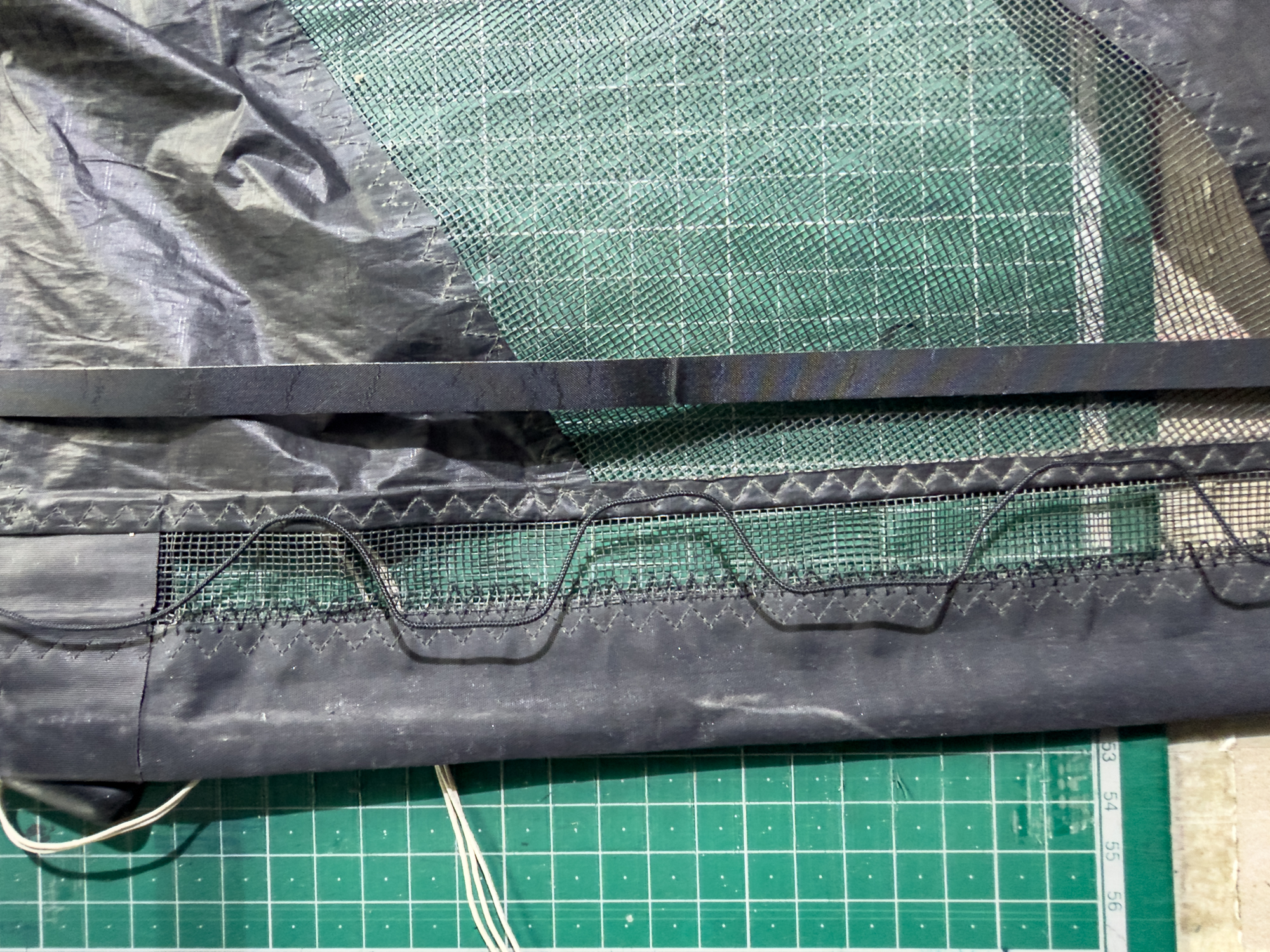
Some mesh leading edges need replacing and at the same time Revolution have introduced a new leading edge without mesh.
The initial idea was to try to span the gap with sleeved kevlar as at 4th October 2025.
The initial idea was to try to span the gap with sleeved kevlar as at 4th October 2025.
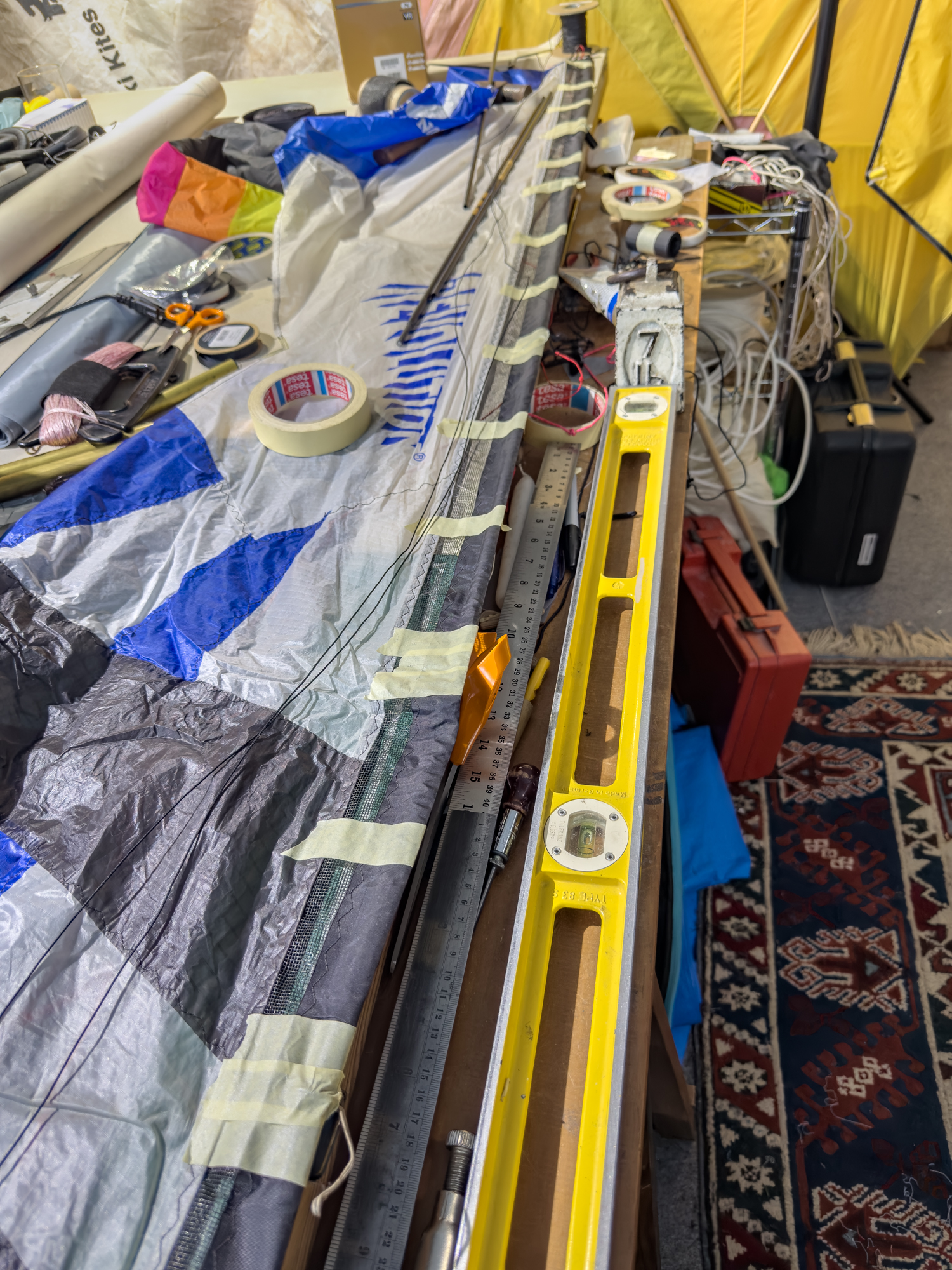
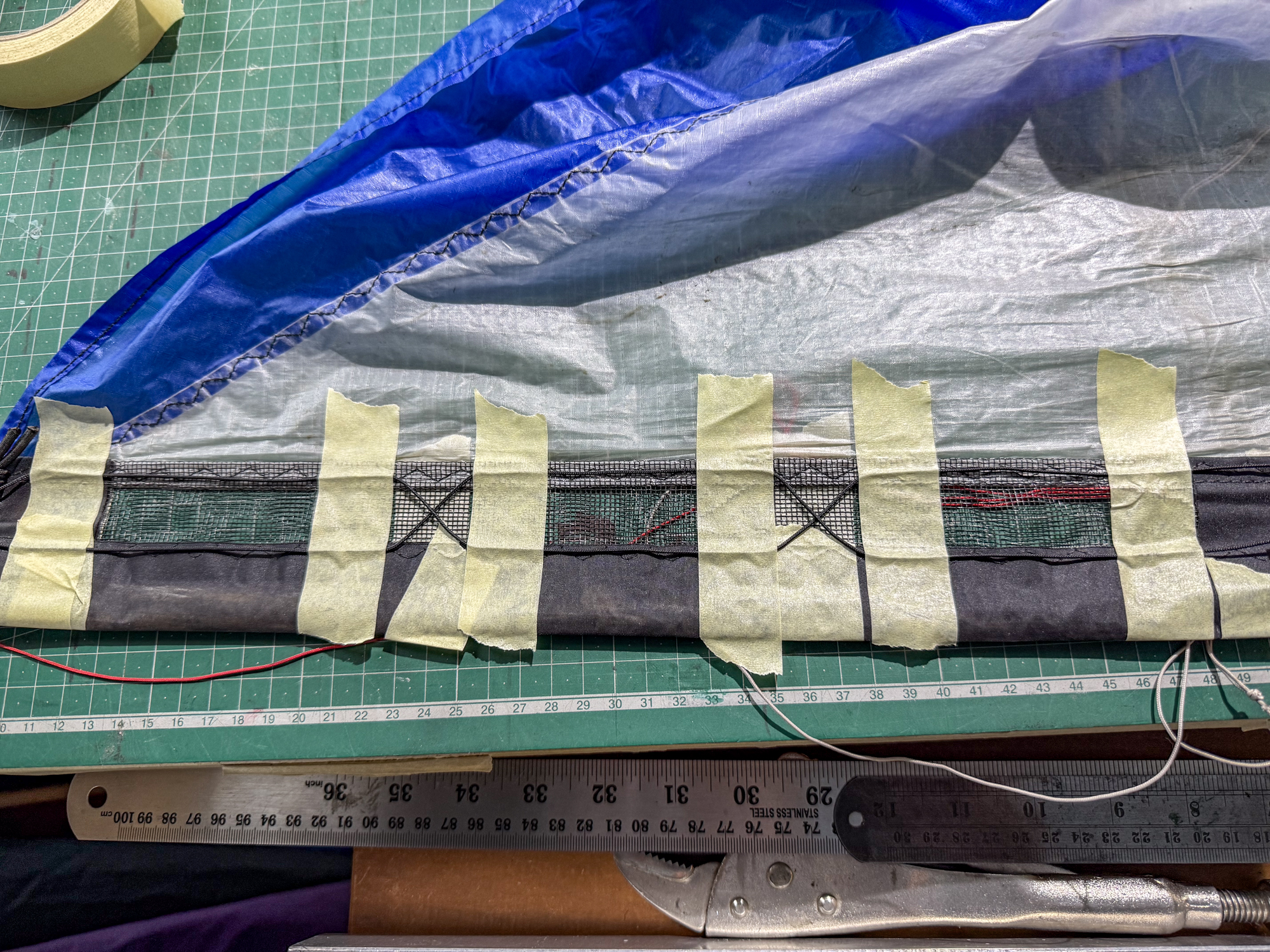
The idea of using the 'X' arrived via a ChatGTP session asking about bridge trusses and then translating to using thread.
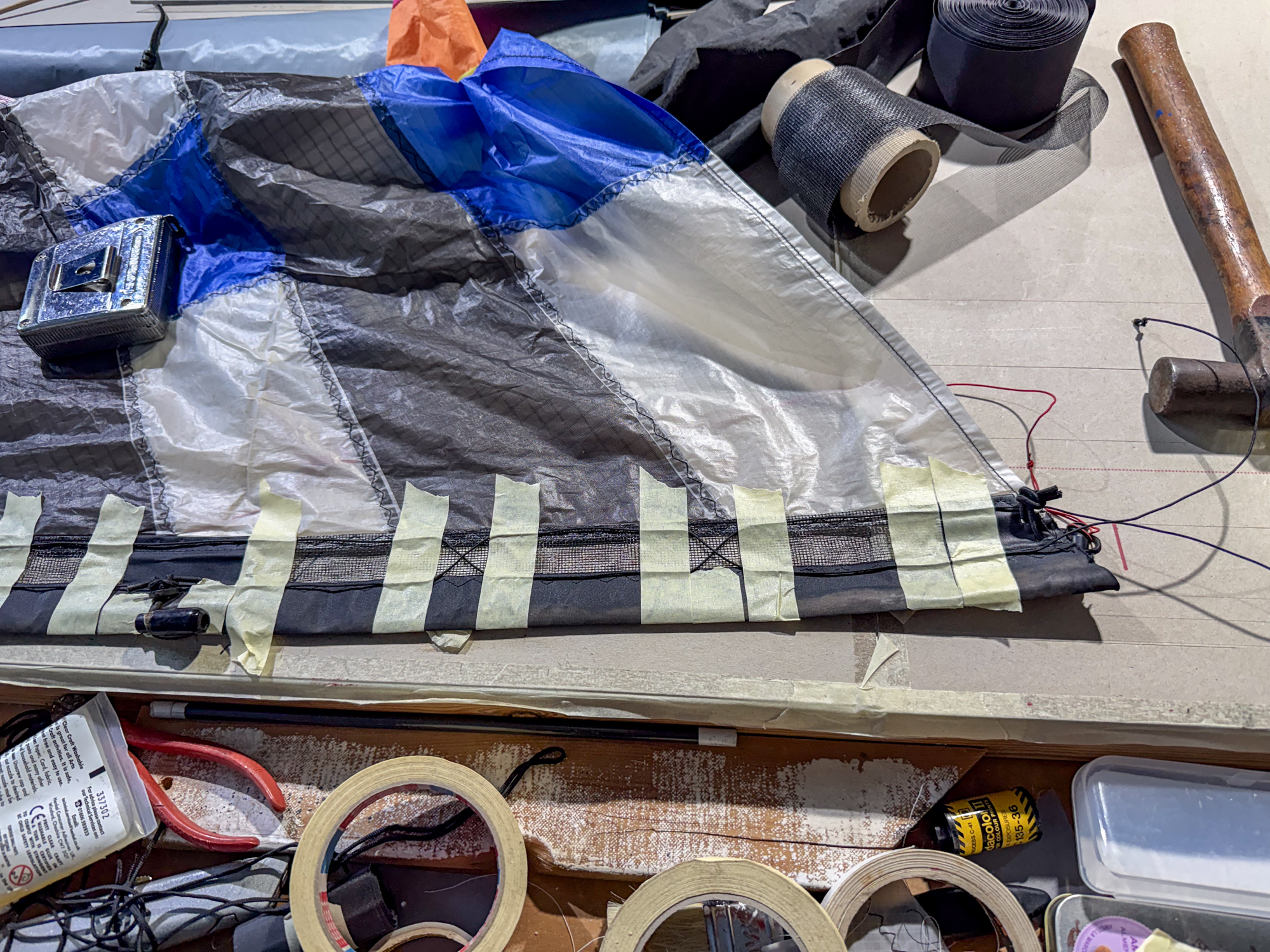
Having established the intervals an initial attempt was made to set the lines by taping and then oversewing.
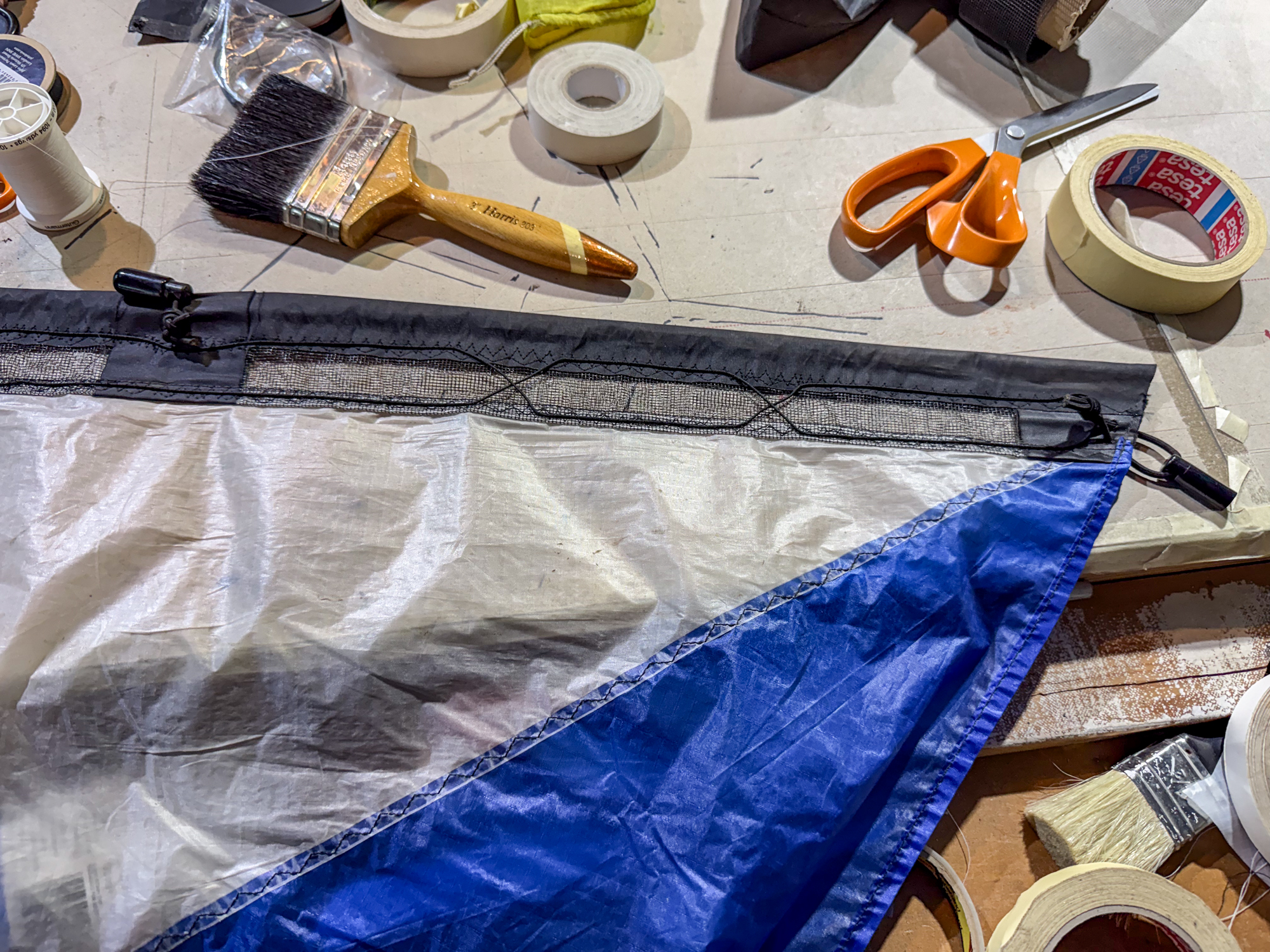
While the first attempt worked in parts it was clear that a more structured process would be required if multiple sails were to be updated.
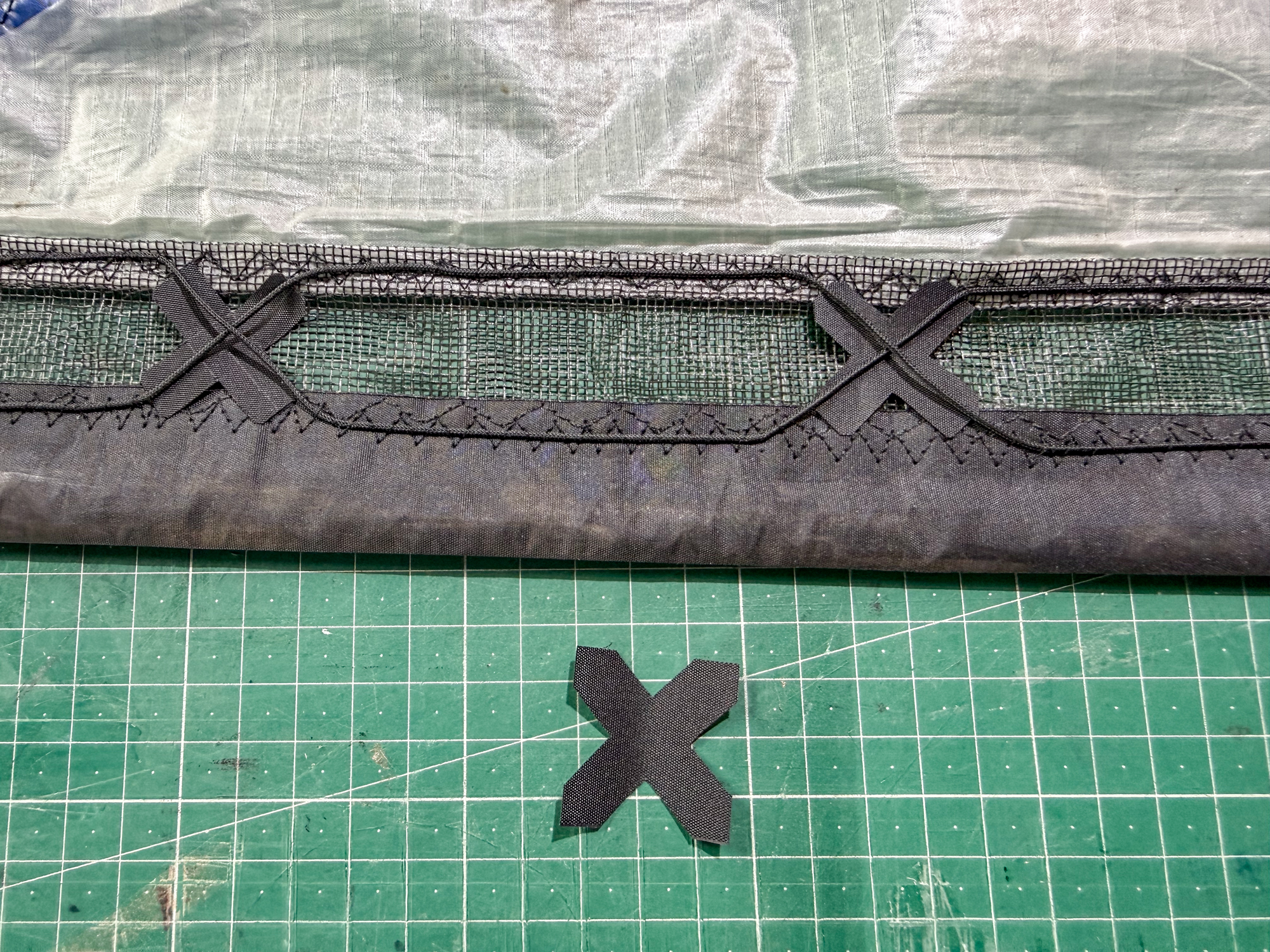
The possibility of retaining the 'X' but adding a dacron element was prototyped and it was recognised that the grain of the dacron should be in line with the legs of the 'X'.
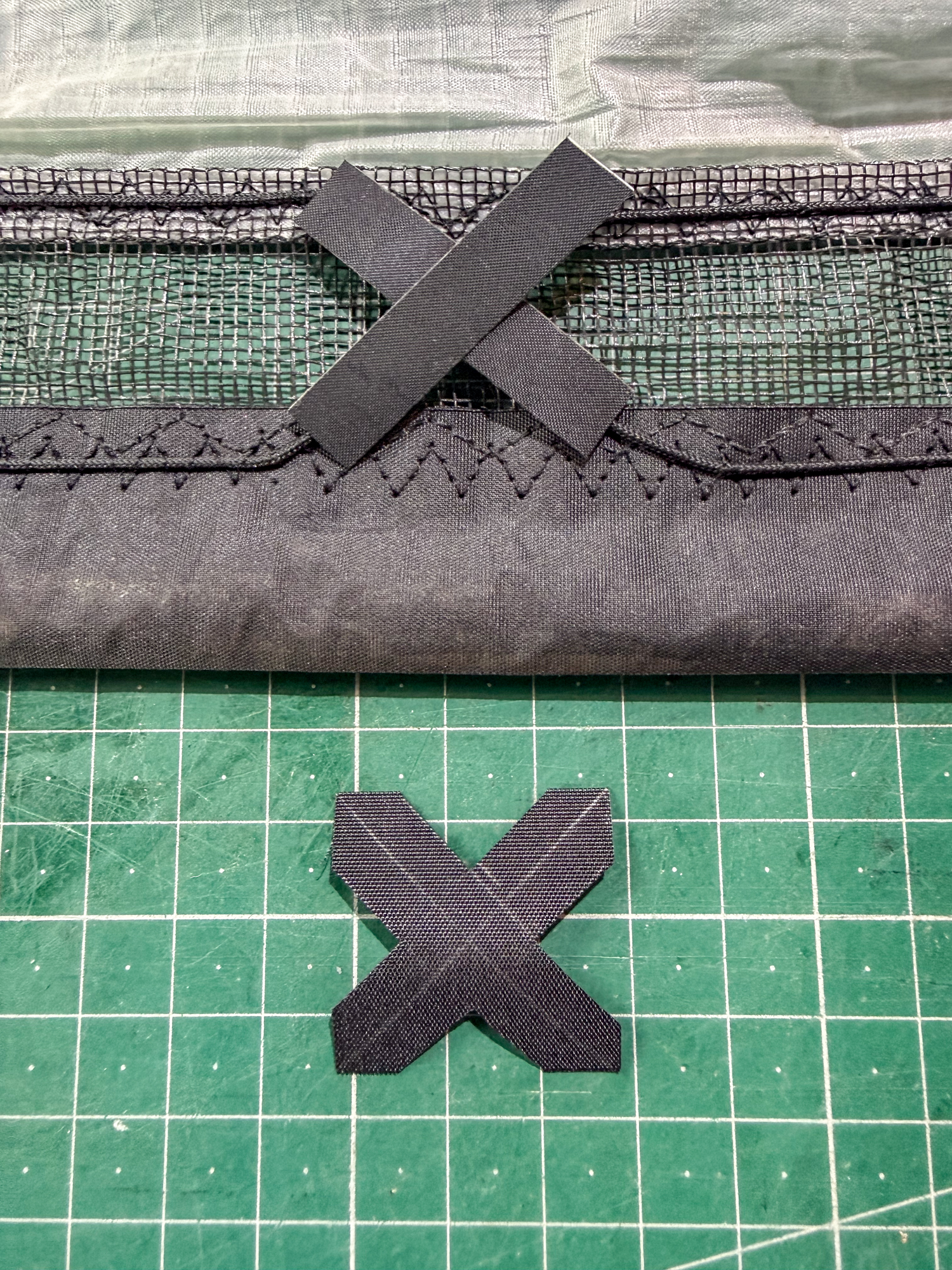
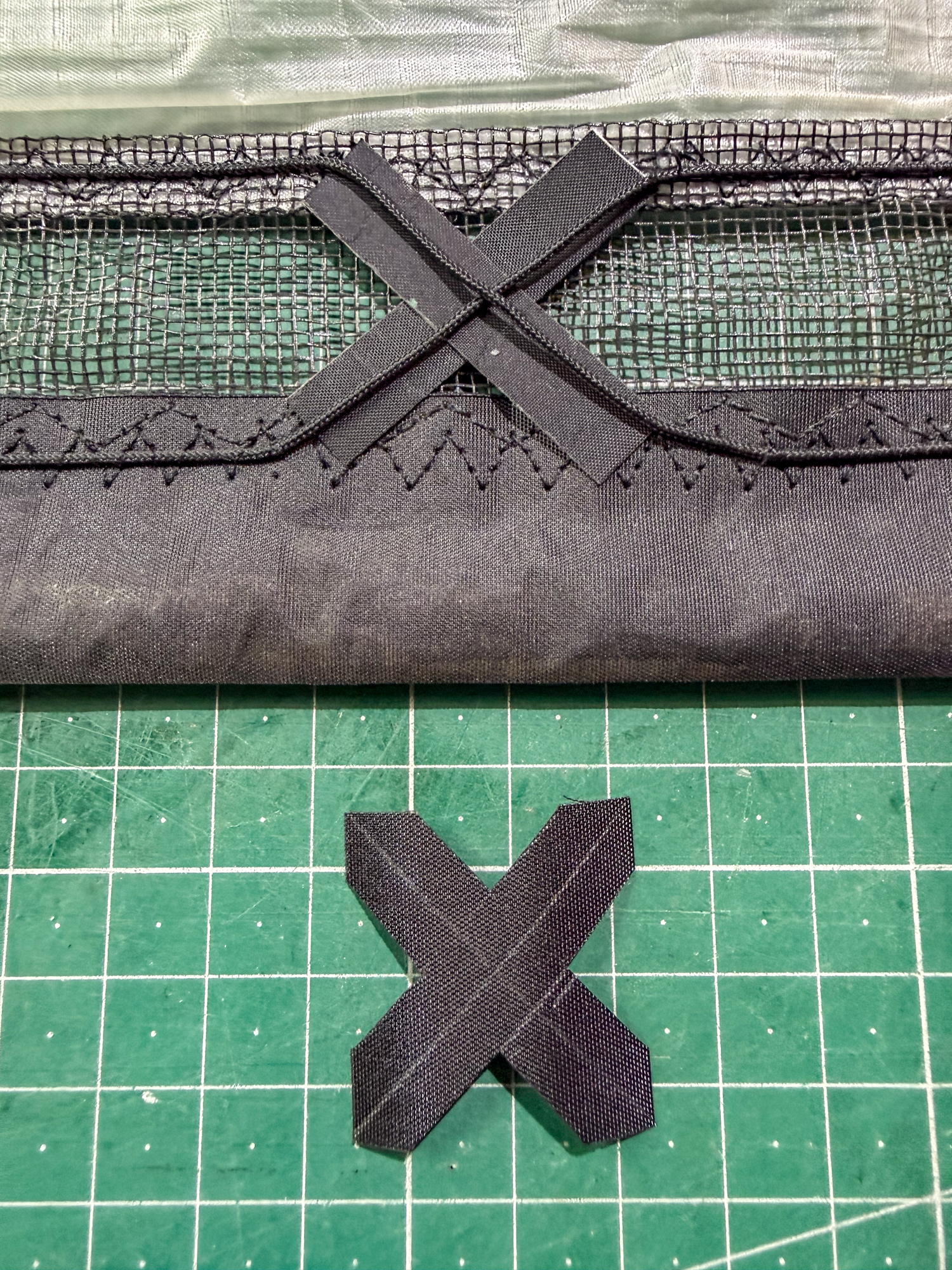
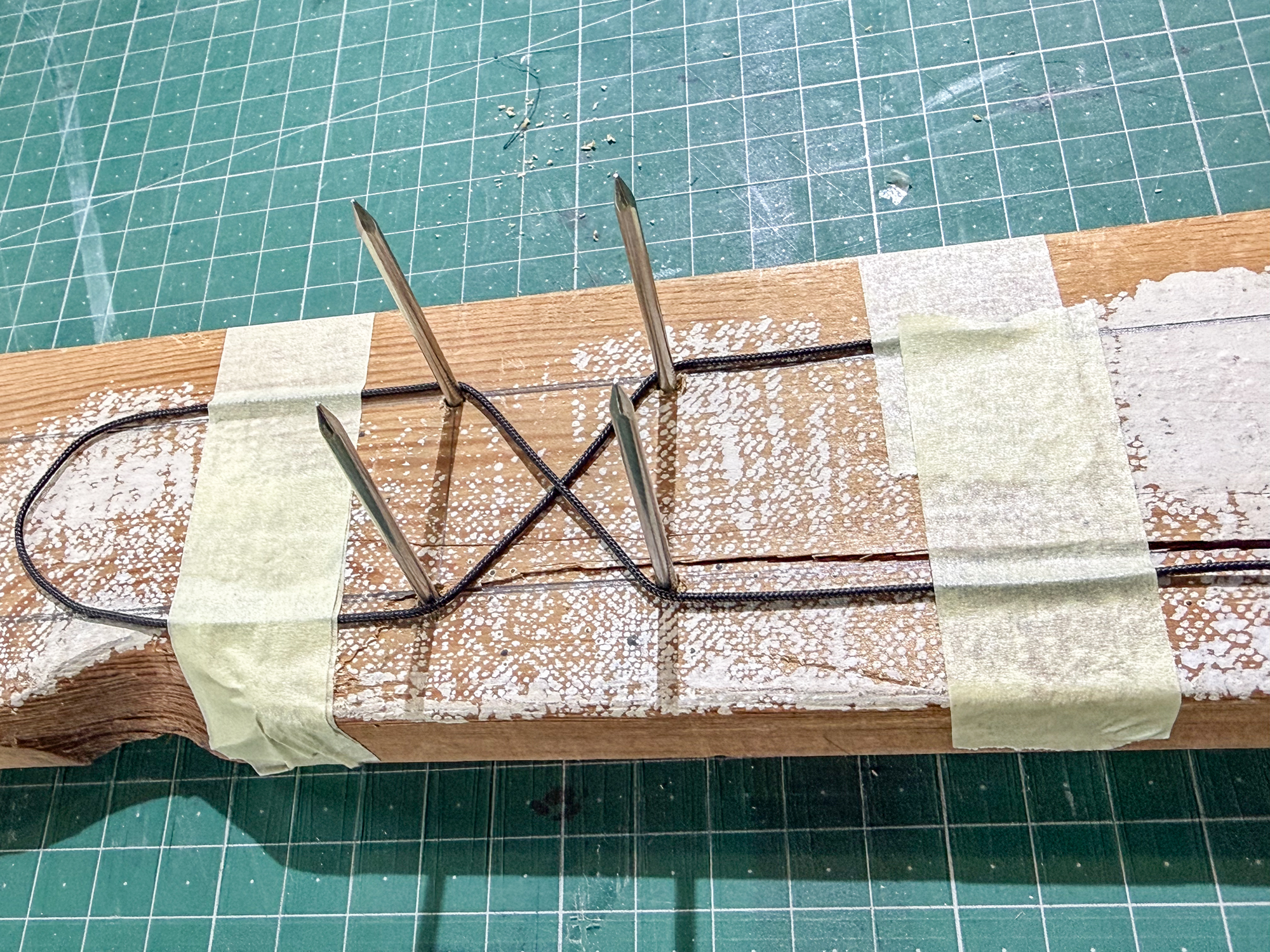
Building a jig to support the sleeved kevlar prior to setting it in place was considered and it seemed like a practical solution for generating multiple sets.
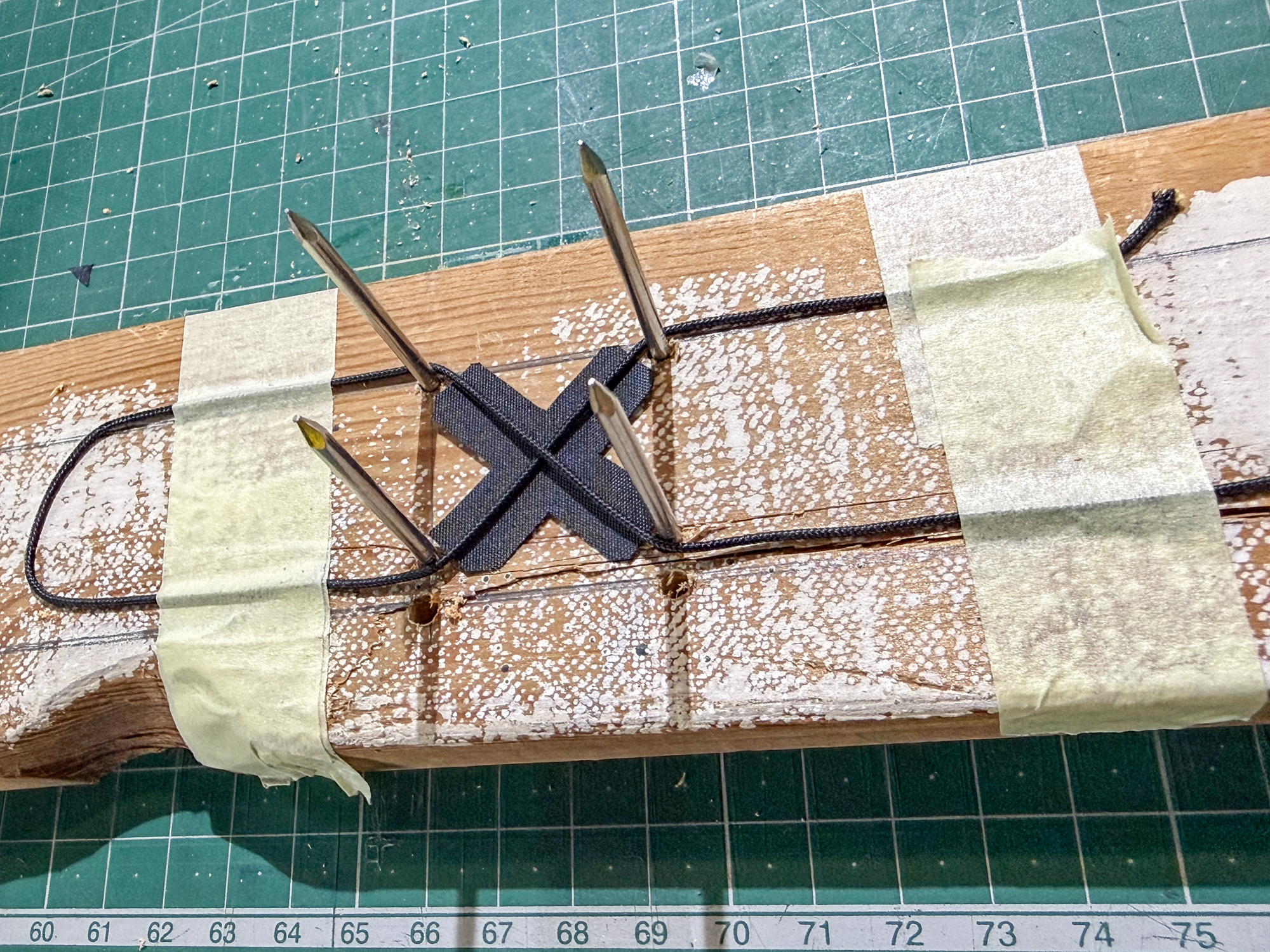
Being able to simultaneously tension all the crossovers and fix the cord to the dacron prior to oversewing looks promising as well.
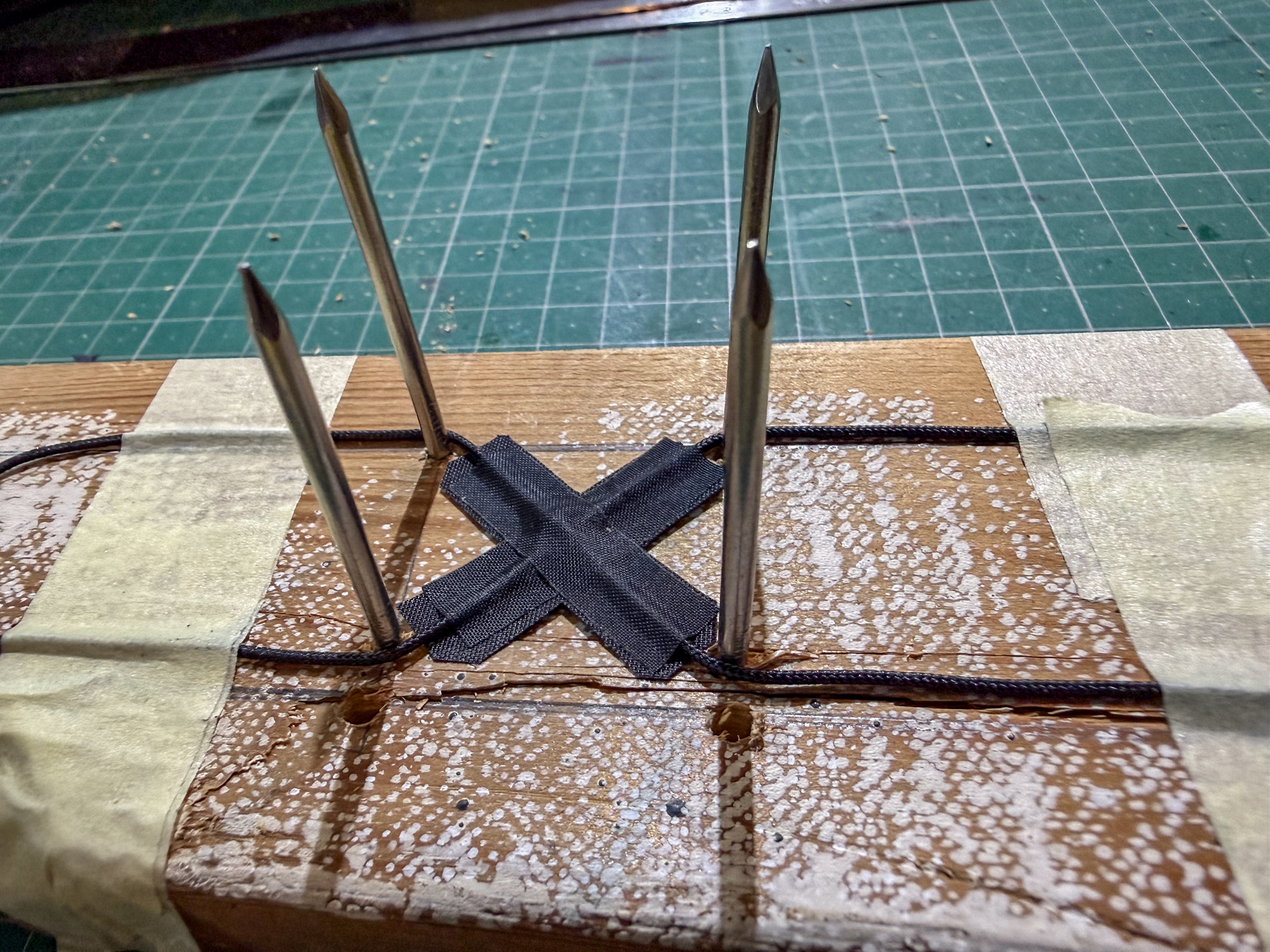
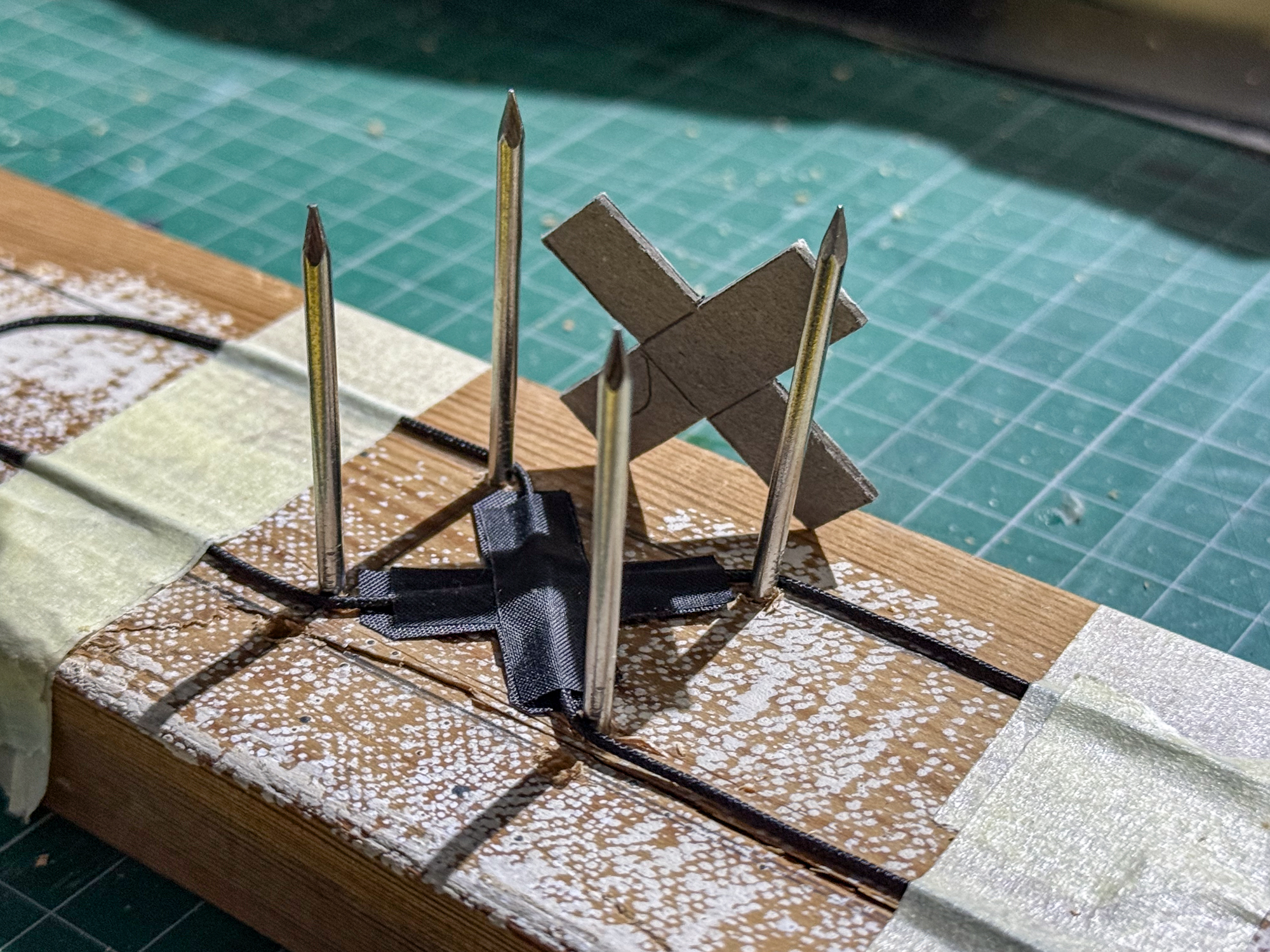
The lost head nails have been reverse hammered into what would be the top half of jig. The bottom half will be drilled to accommodate the nail points to keep the whole structure stable.
The nail heads will probably be glued in place once the lower part of the jig is aligned on the nail points.
The nail heads will probably be glued in place once the lower part of the jig is aligned on the nail points.
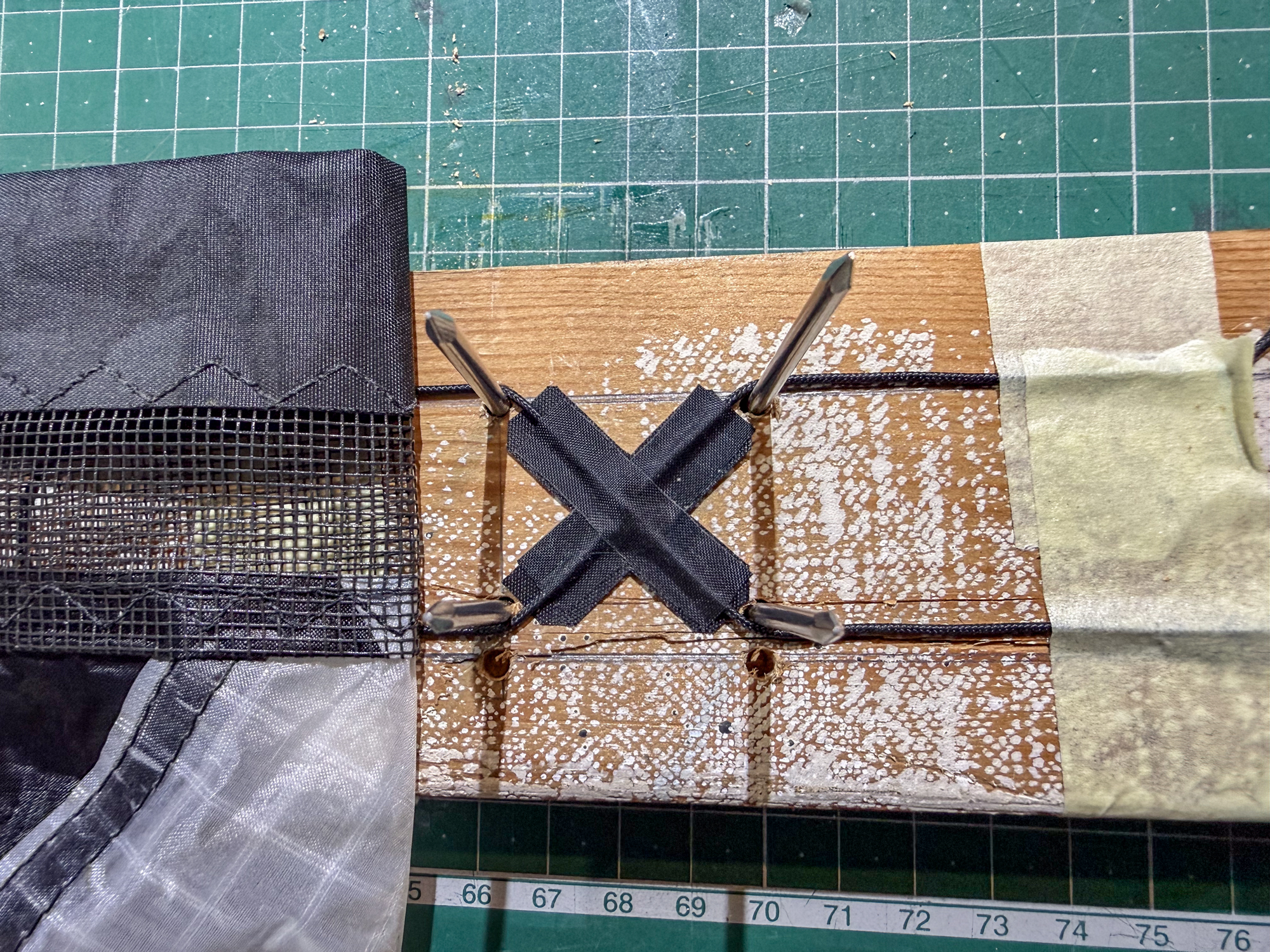
For the Rev1/Zen format there will be sixty pins for the 'X's and probably a couple more for end loops and tying off.
It may be possible to prepare multiple sets on the jig, initially laying in the dacron 'X' elements on the previous taped set.
It may be possible to prepare multiple sets on the jig, initially laying in the dacron 'X' elements on the previous taped set.
An accurate template will be needed for cutting the dacron Xs.
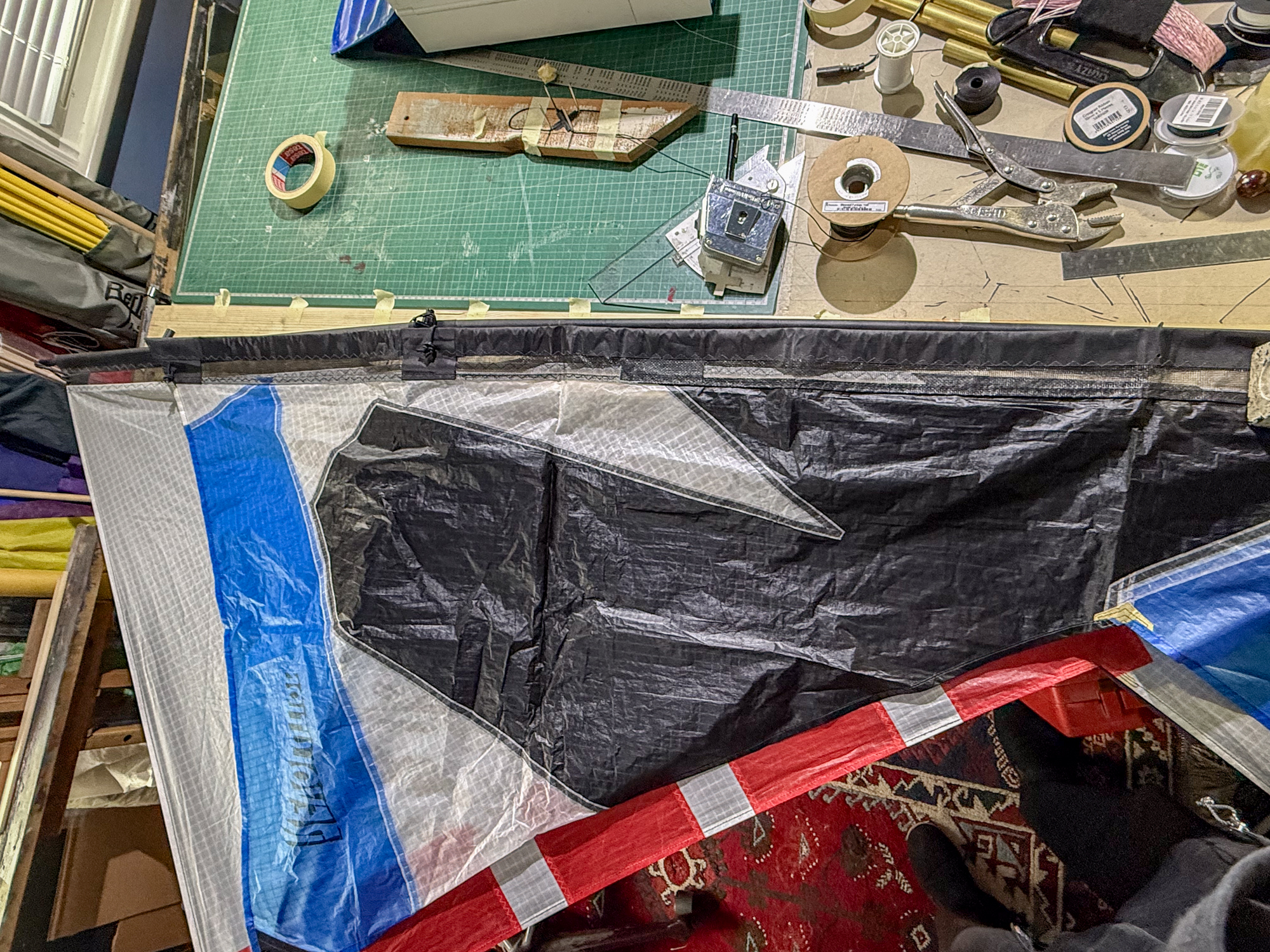
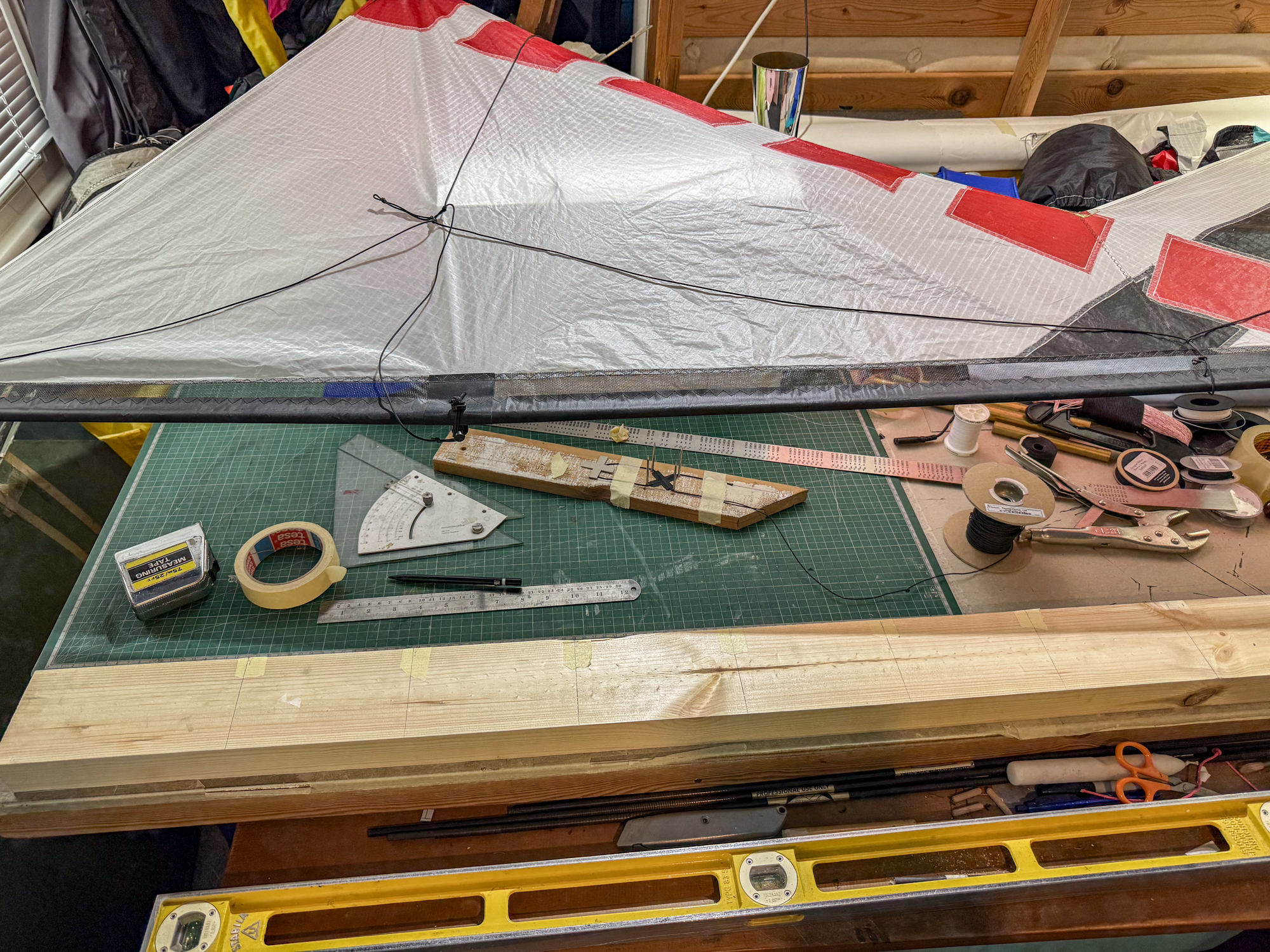
Sanity check with actual production 1.5 and Not Zen sails to arrive at common intervals for the crossovers.
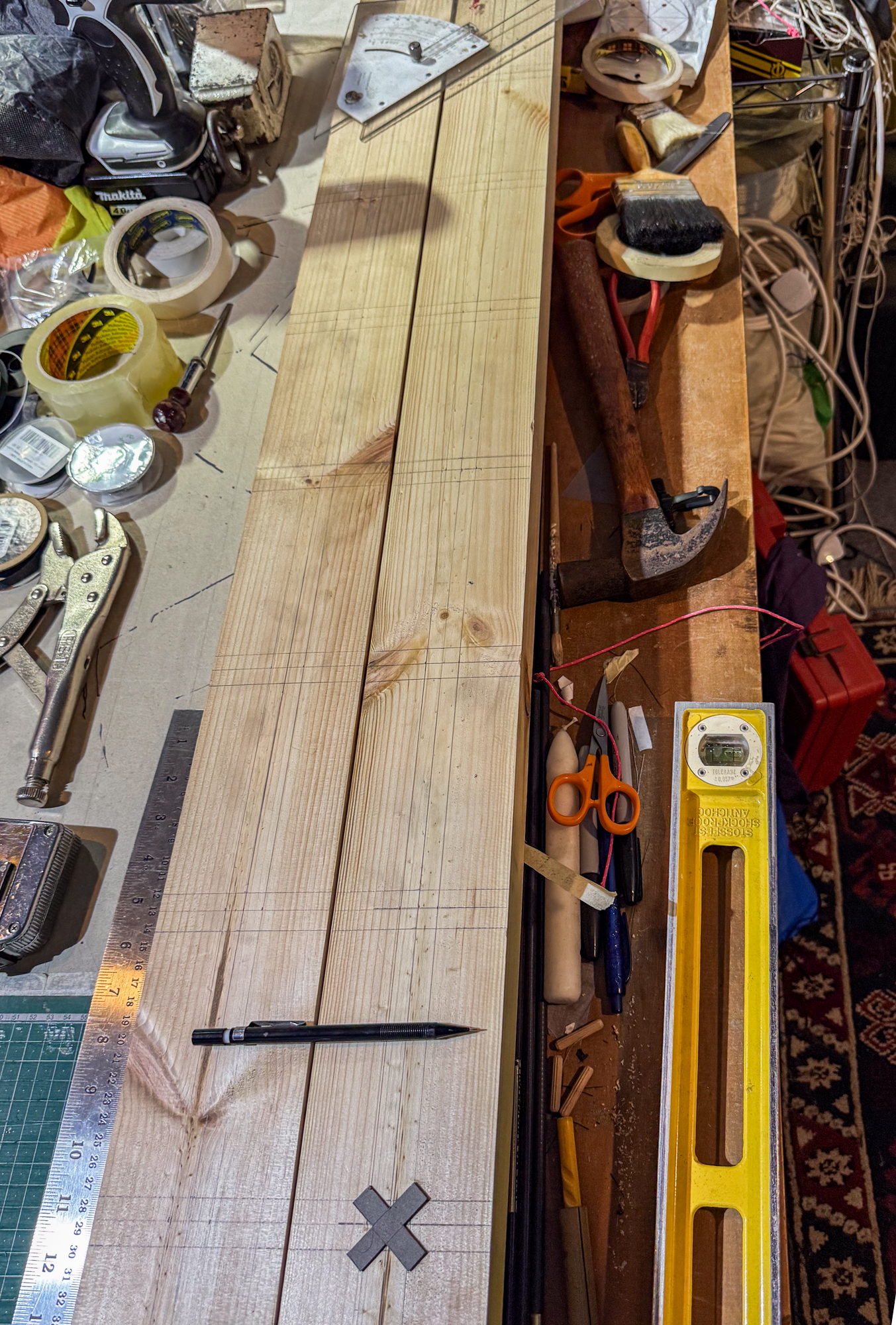
First marking up after adjusting the interval and then further guidelines added prior to marking the pin locations for drilling. A glassene template will be made to align the drilling centre points.
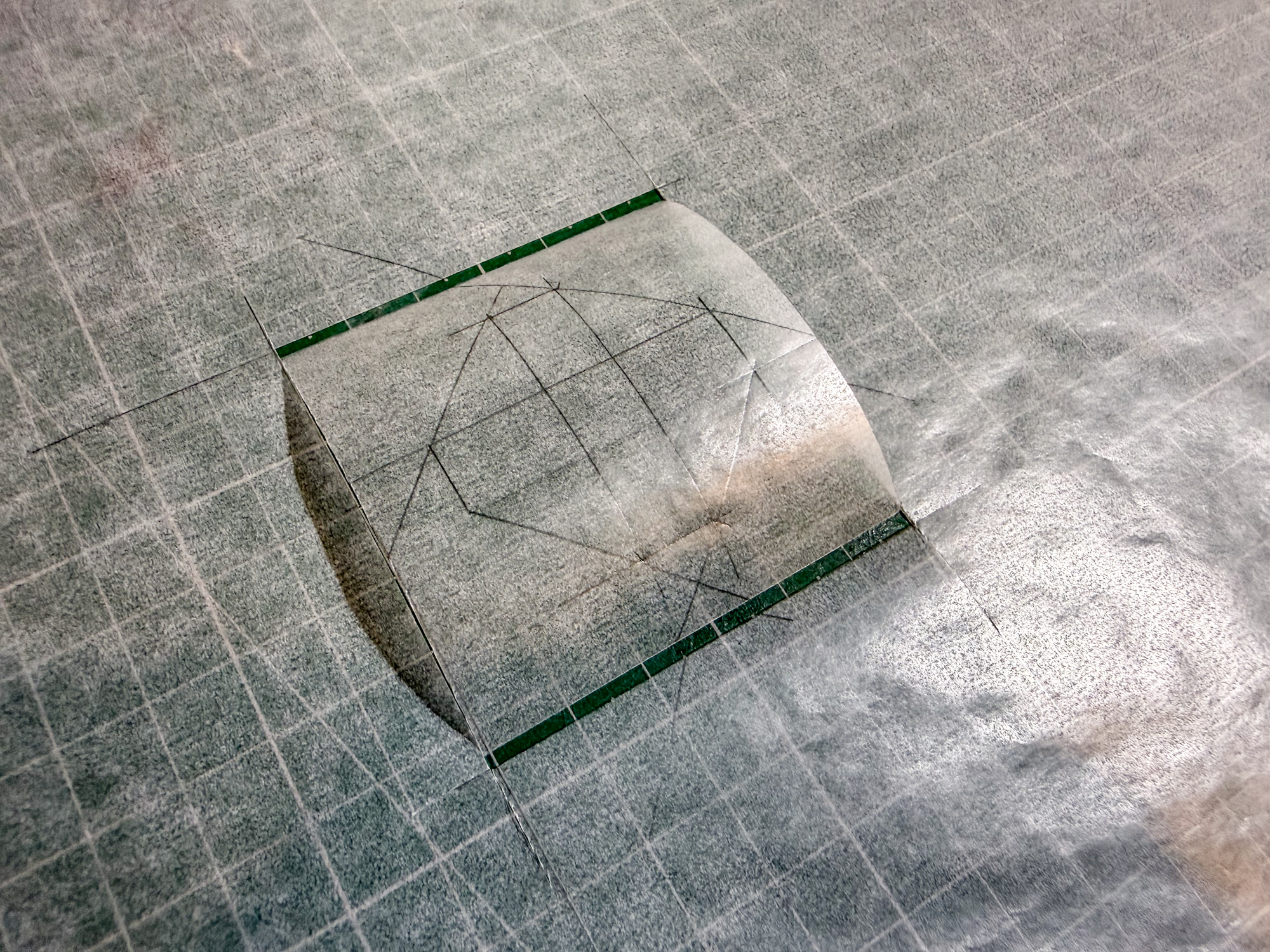
Sharp drawing for marking up.
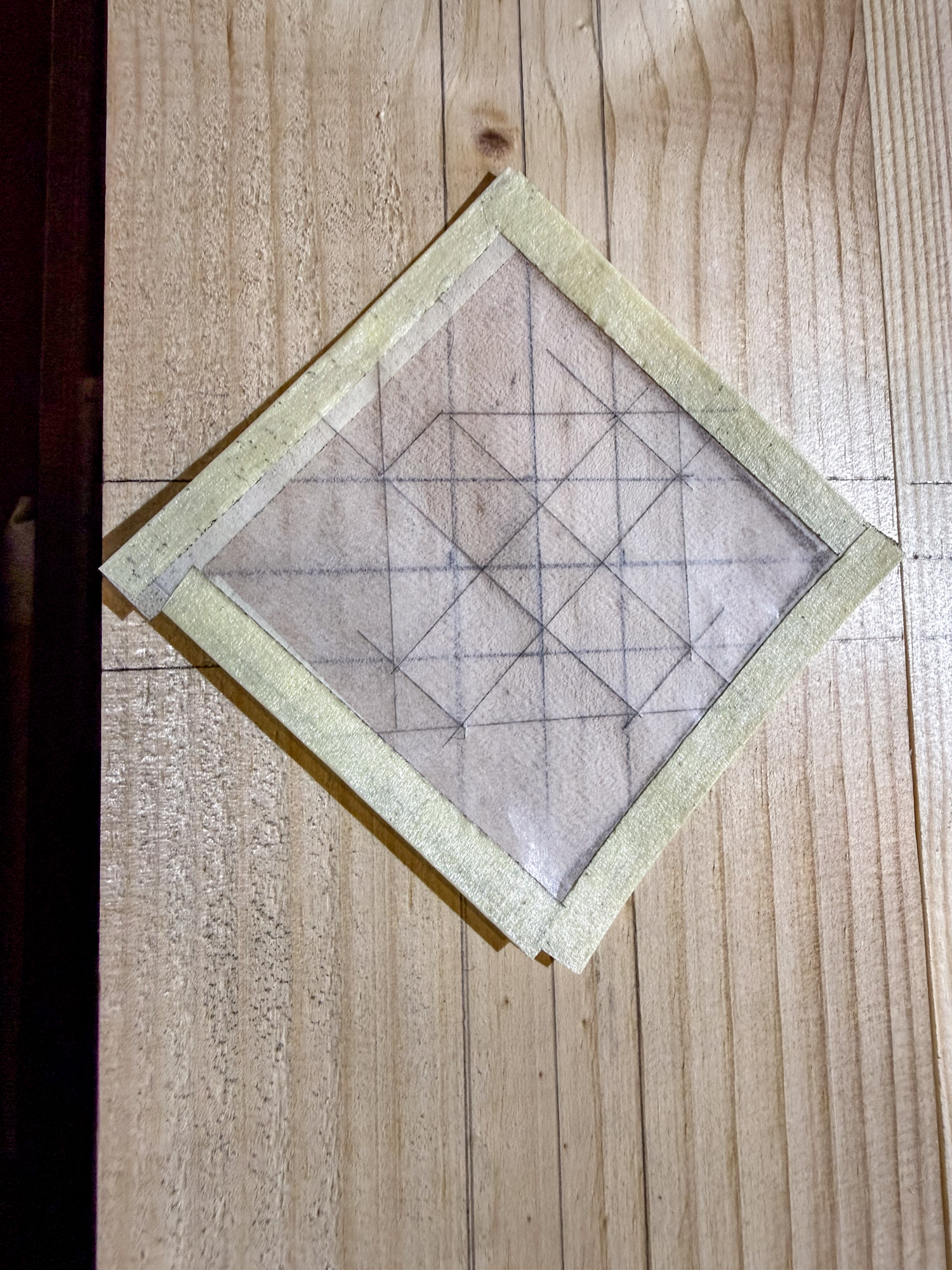
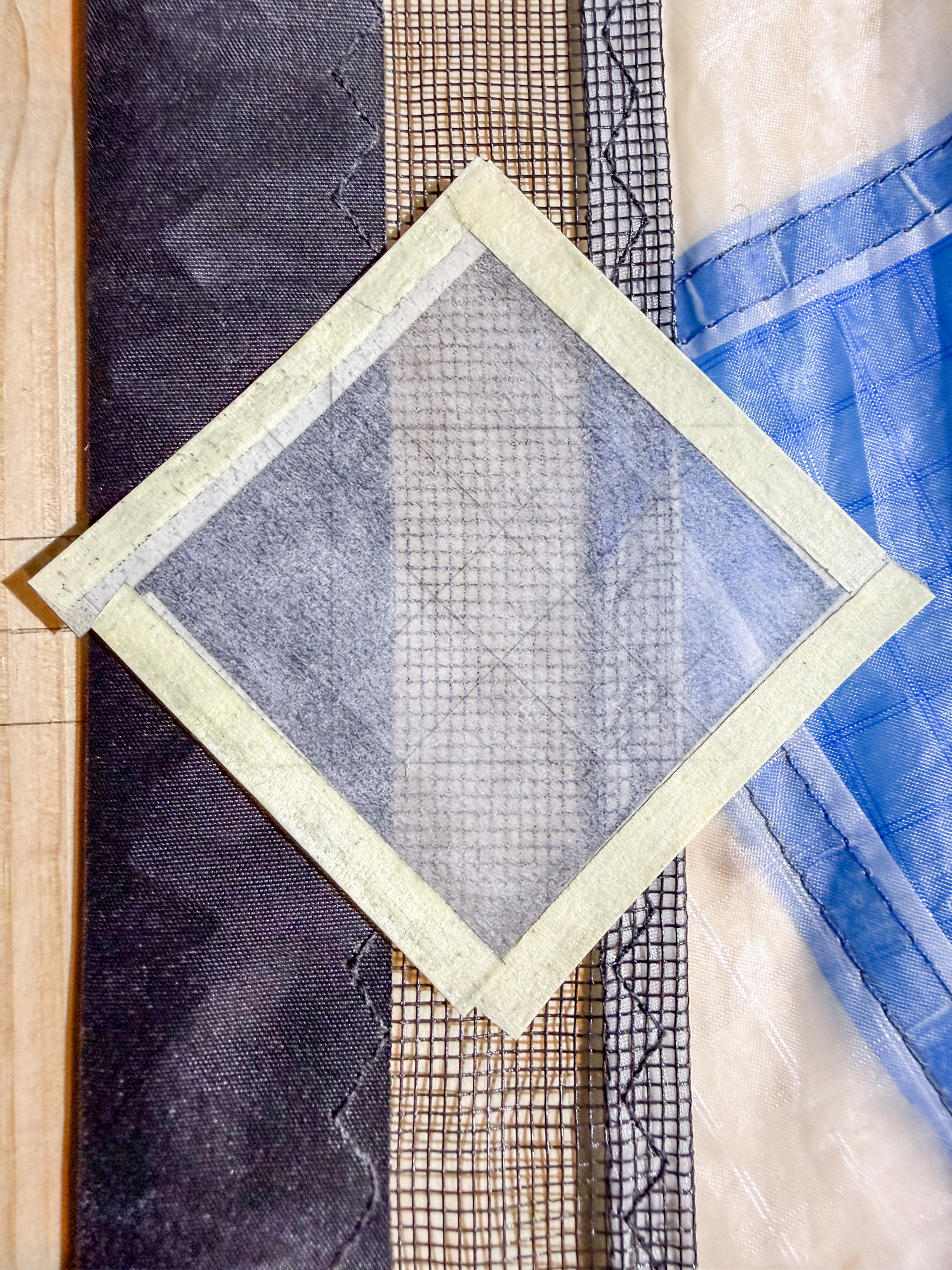
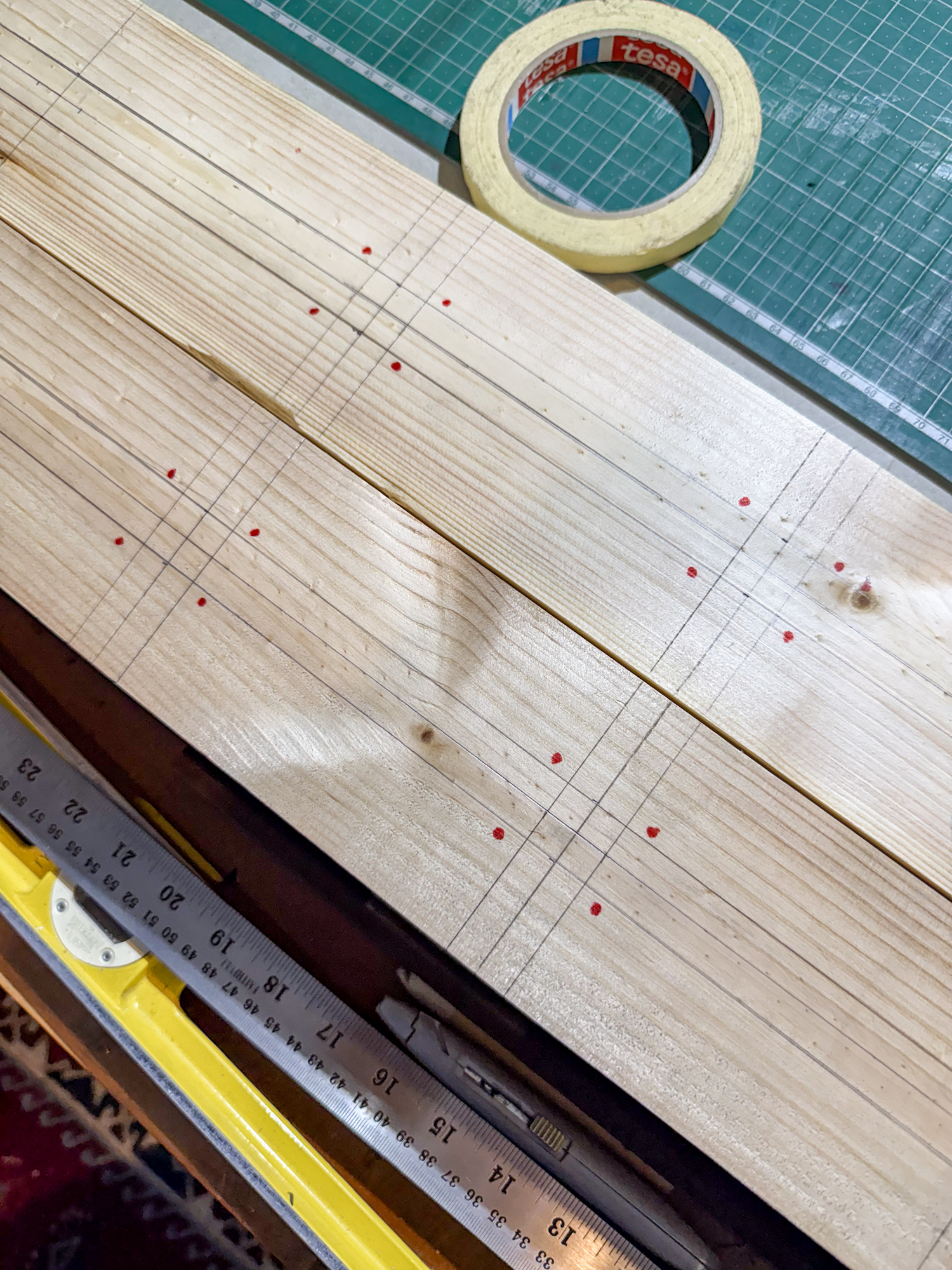
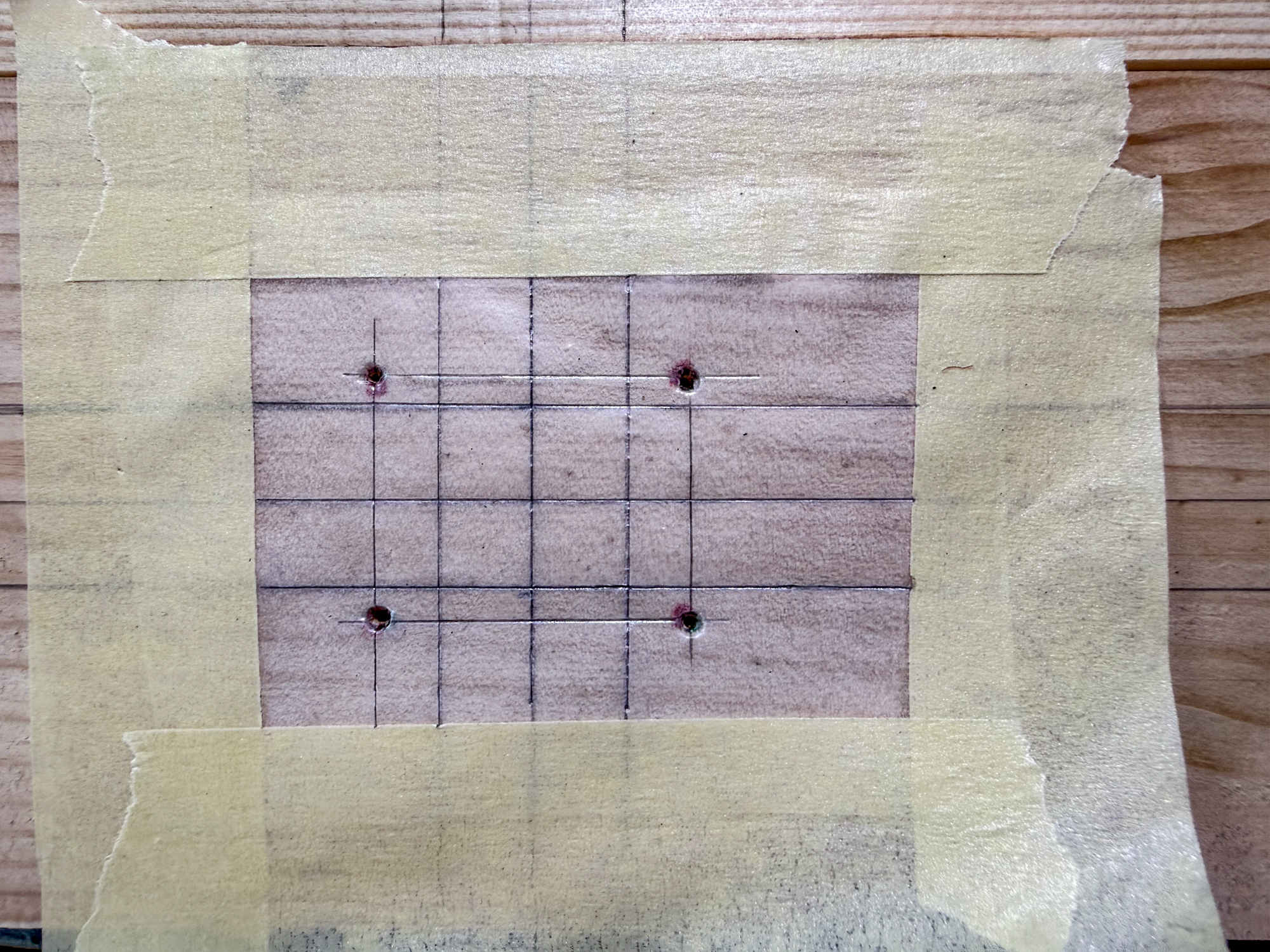
Another drawing for centre punching.
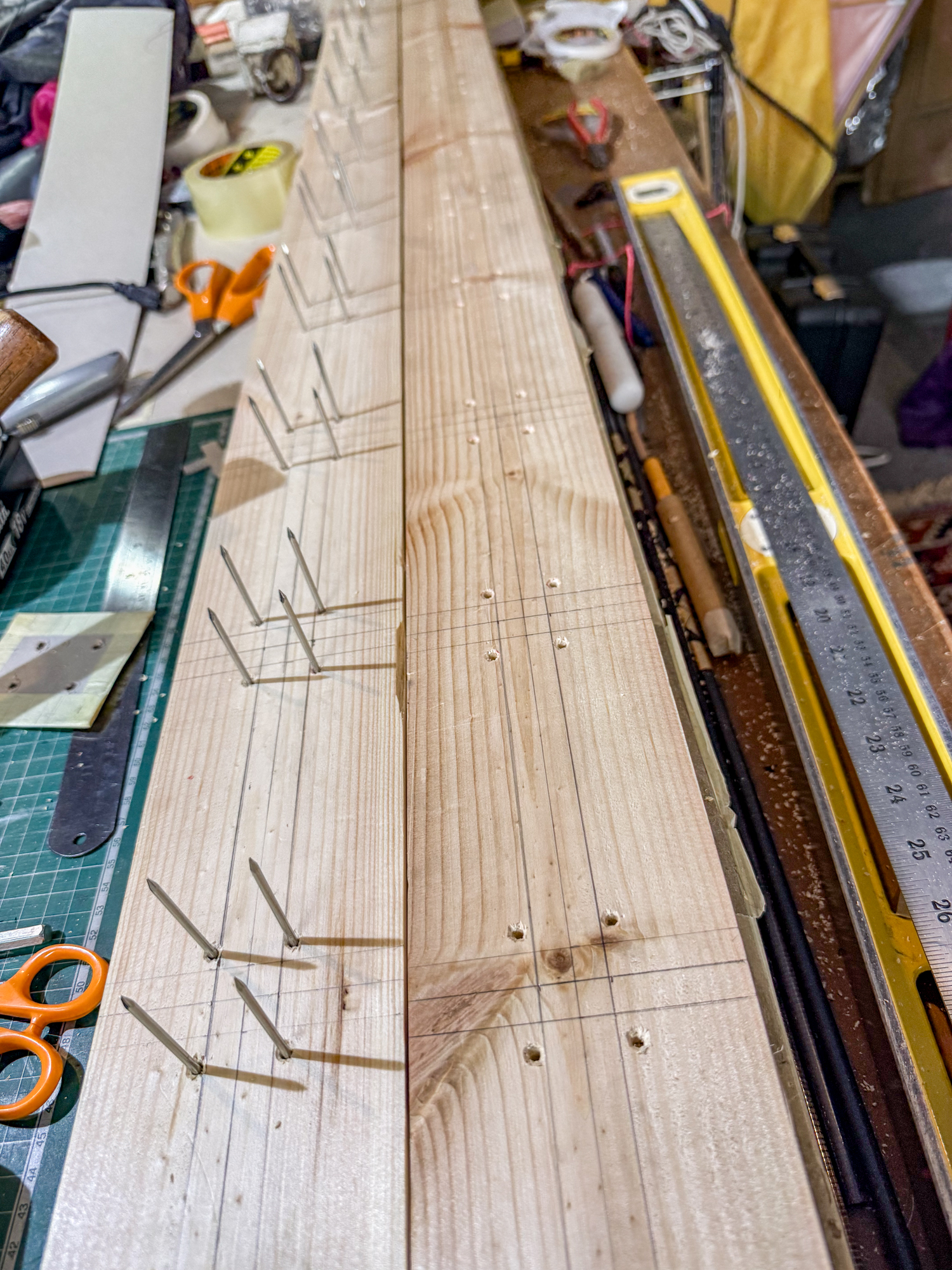
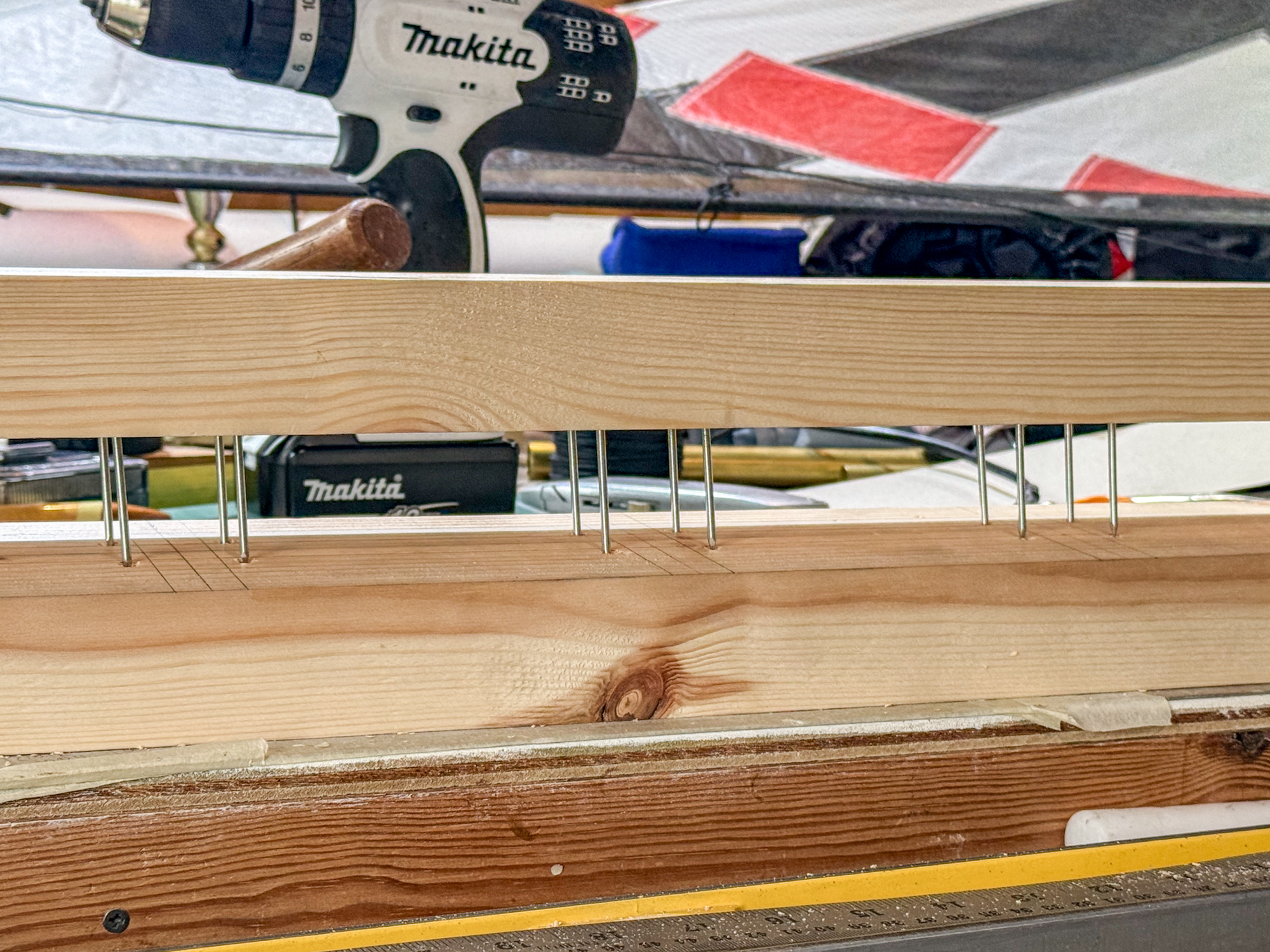
First fit.
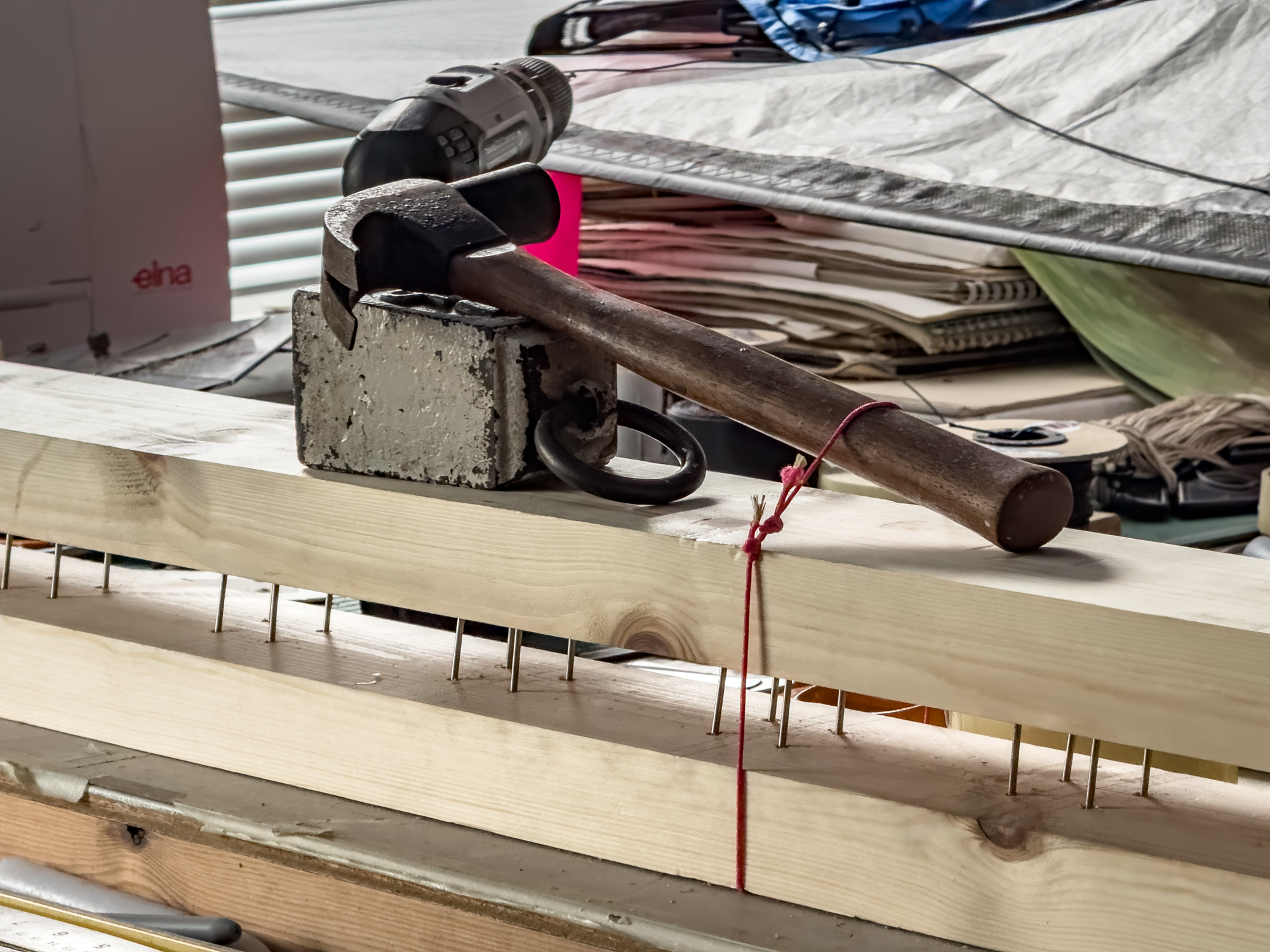
Further pressure added.
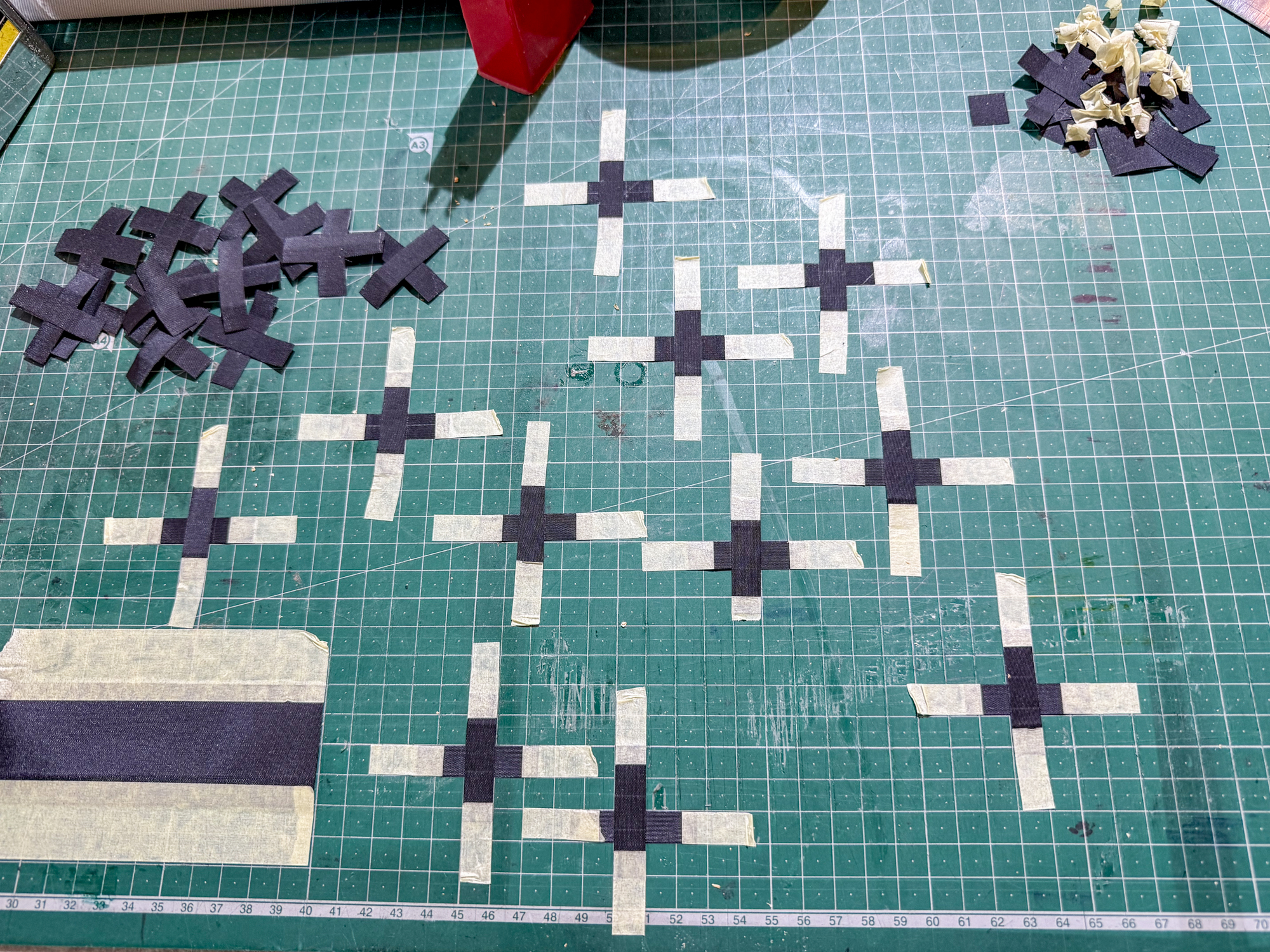
After cutting a few Xs it was clear that fabricating them would be much quicker.
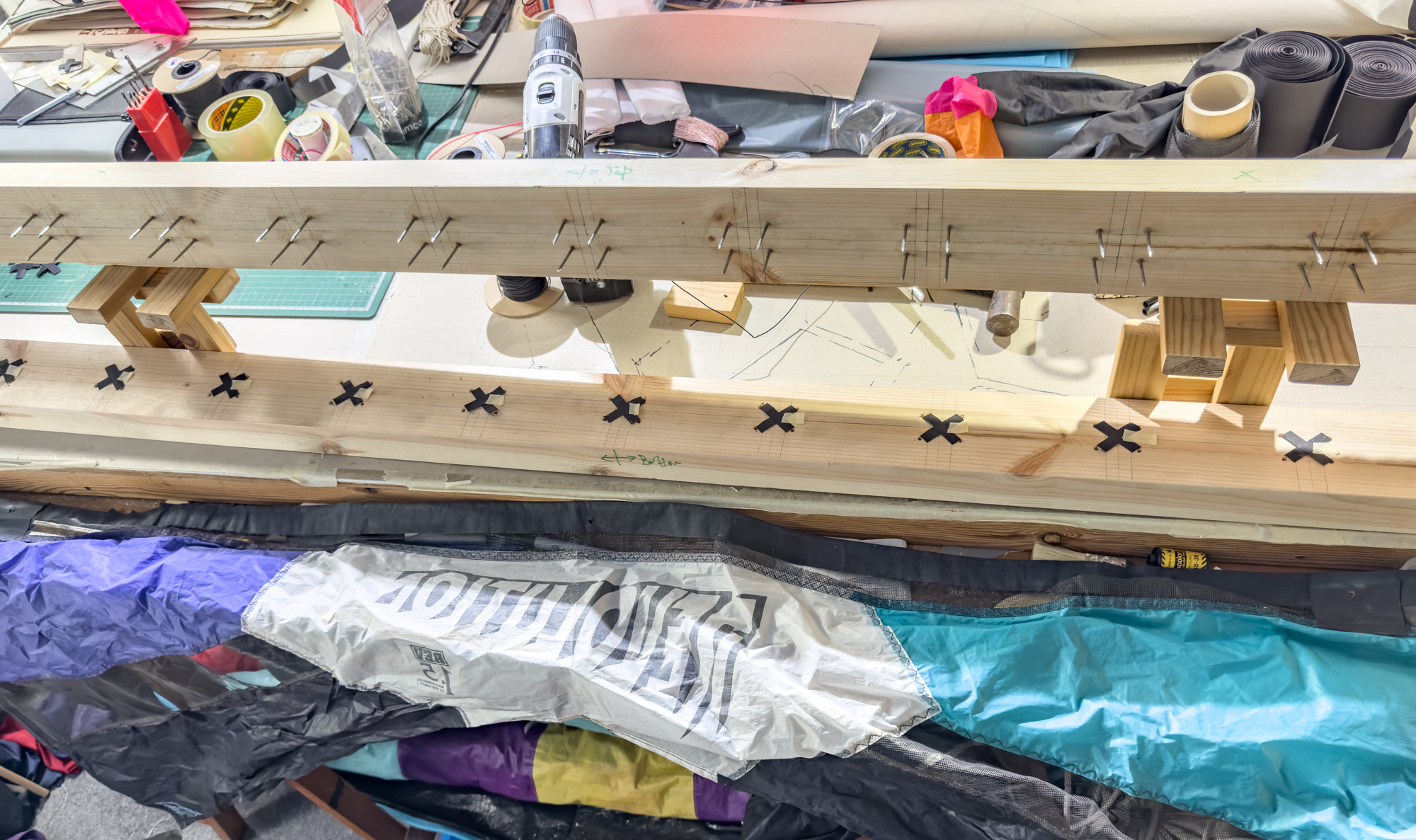
Xs were taped in place to start.
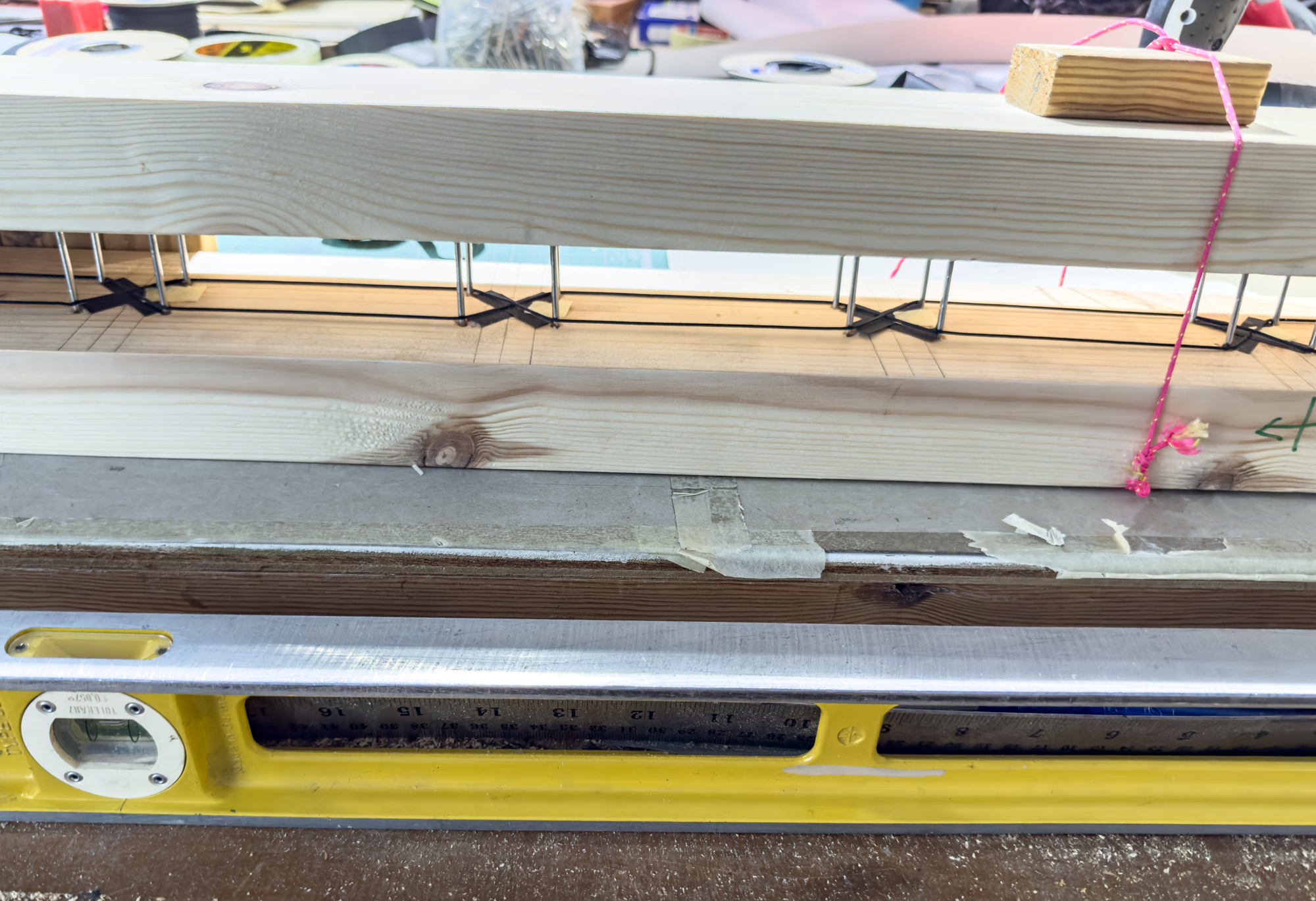
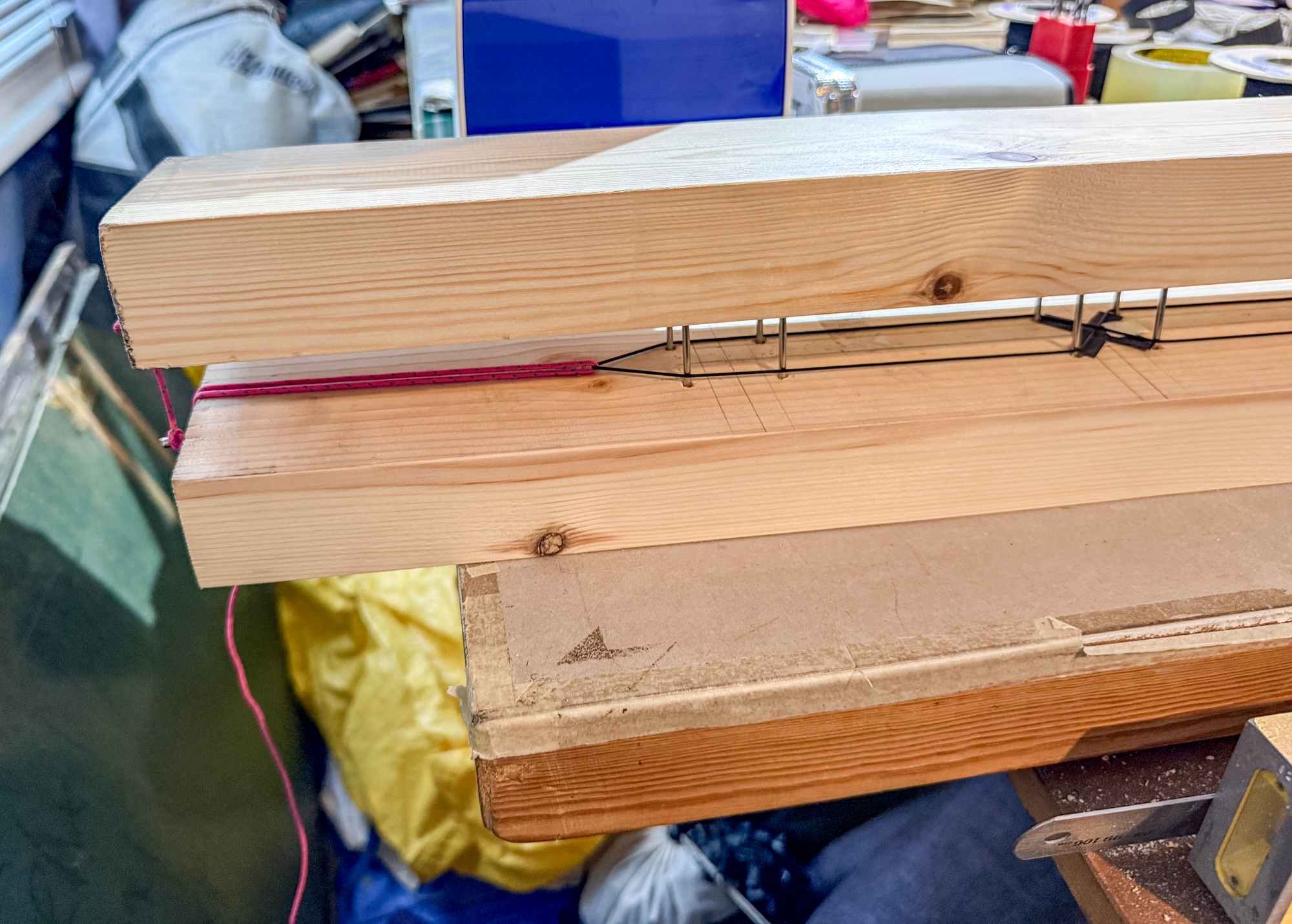
Tension was applied to the laced line and then re-set as sufficient spare line had not been allowed initially. It will have to be re-set again as the X at the vertical spar top has not been omitted.
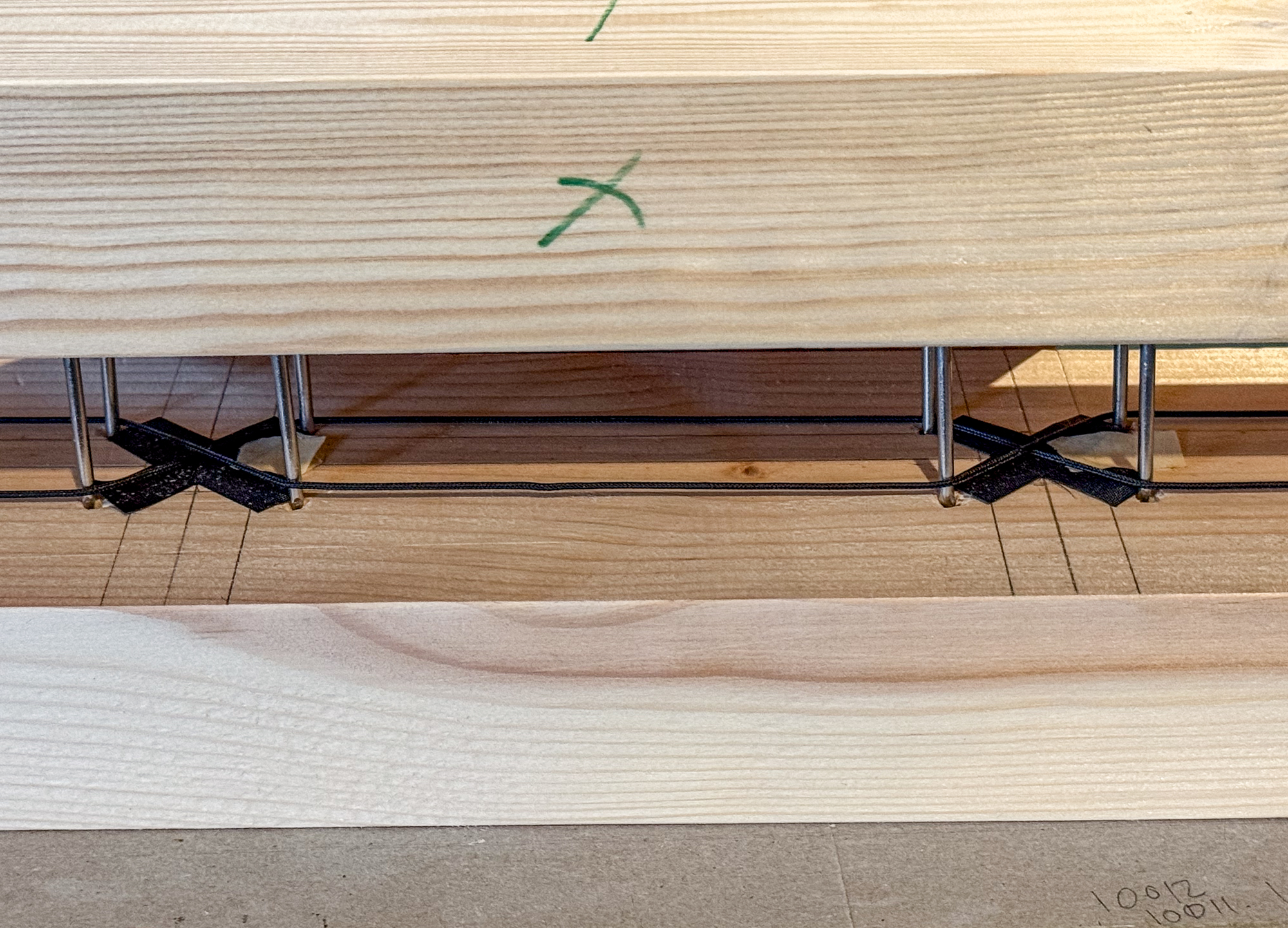
Ready for taping, or almost so, 20th October.
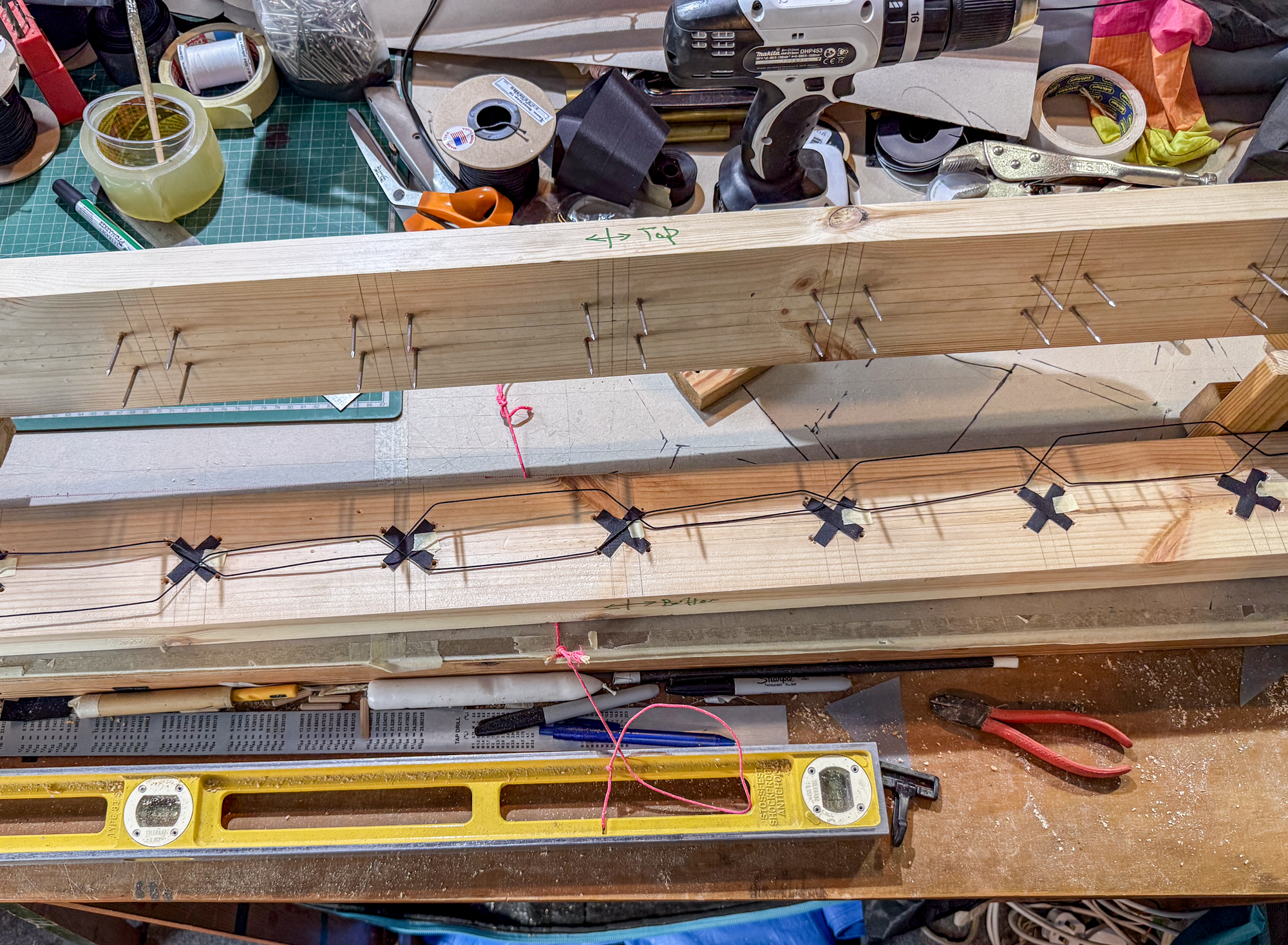
21st October... the lines were taken off and replaced by a slightly longer set and weights were applied to maintain the tension.

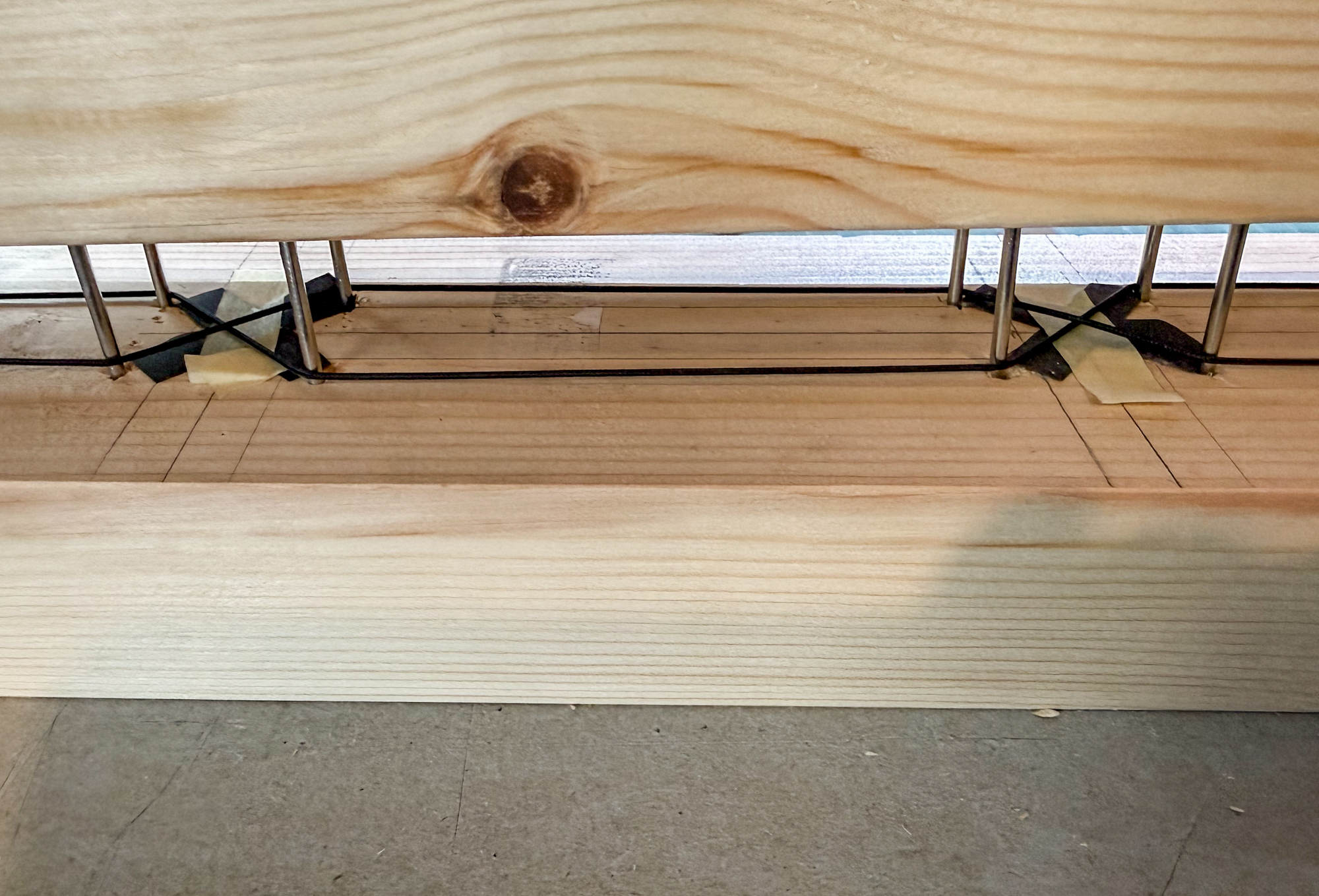
The Xs were more effectively secured.
Page 1
Page 2
Page 3
Page 4
Page 5
Site Updated January 2026 Felix Mottram